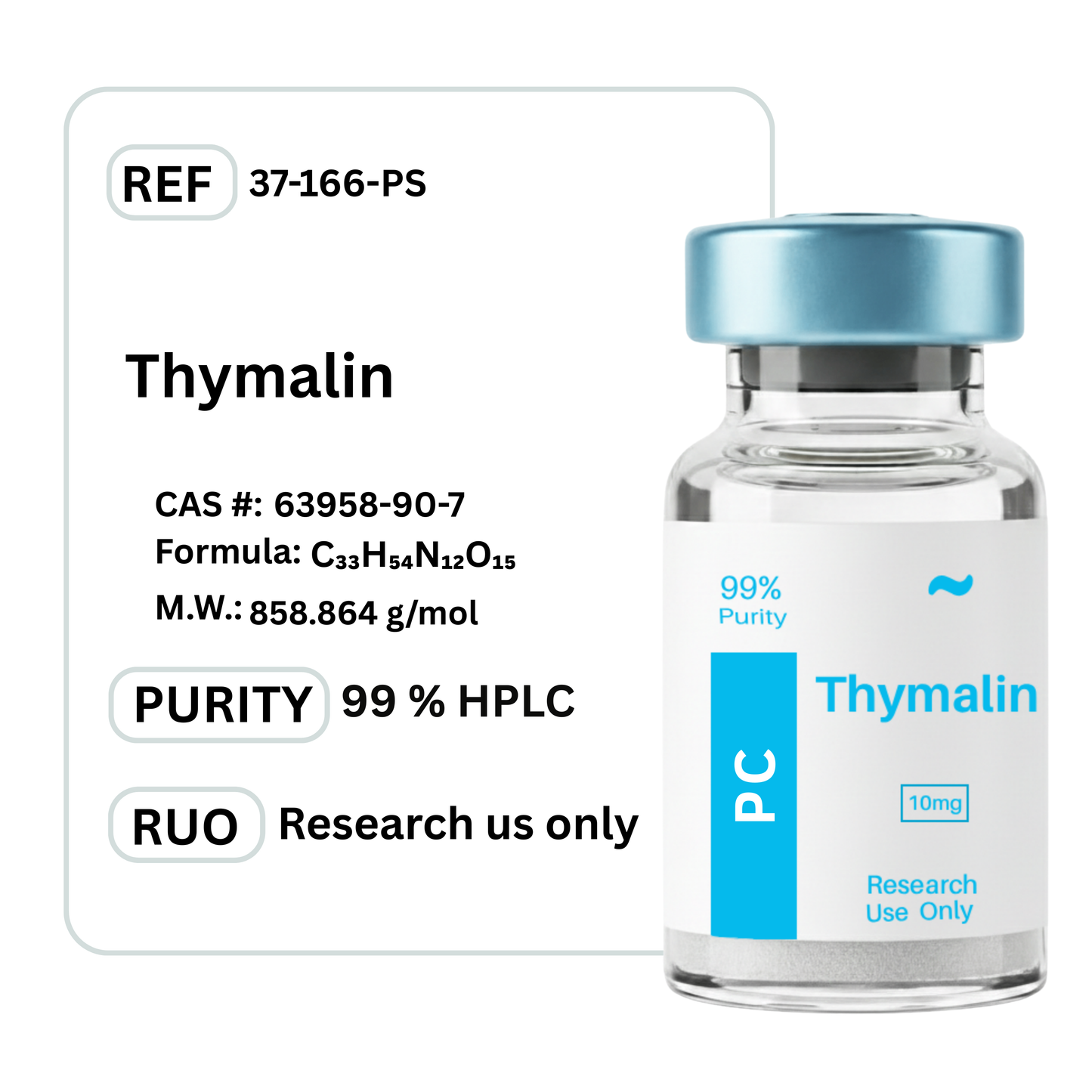
Thymalin
Thymalin
This batch of Thymalin Peptide has been third party lab tested and verified for quality.
Contents: Thymalin (Thymic Peptide Complex)
Form: Powder
Purity: 99.3%
Couldn't load pickup availability
Free Reconstitution Solution automatically added to your cart with each order.
This product is Made, Tested & Shipped From Canada.
Ships Today
Order by 1:00 PM EST
Free Shipping
For 2 or more vials
Verified+

Thymalin Peptide
Thymalin is a synthetic, high-purity biomimetic peptide that is structurally analogous to thymulin, a crucial polypeptide hormone naturally secreted by the epithelial cells of the thymus gland. Isolated and characterized in 1977, this peptide is extensively studied for its potential to act as a significant immunomodulatory agent and immune restorer. Preclinical and laboratory investigations suggest Thymalin plays a vital role in balancing the inflammatory response and demonstrates notable neuroprotective properties across various experimental models. Seminal research, particularly from prominent Russian biogerontologists, indicates that Thymalin, often studied in combination with other pineal and thymic extracts, may hold potential for systemic biological rejuvenation, contributing to an extended healthspan and promoting longevity in aged subjects.
Thymalin Peptide - 10 mg Overview
Thymalin is classified within the group of biologically active thymic peptides, recognized for their foundational role in orchestrating the body's immune system modulation. Its primary mechanism of action is focused on the central processes of development, differentiation, and functional capability of T-lymphocytes (T-cells). Research has consistently demonstrated Thymalin's capacity to assist in the normalization of compromised immunological parameters—such as dysfunctional T-cell subsets or immune-suppressive states—which frequently occur due to natural aging, prolonged physiological stress, or disease pathology.
Laboratory evidence suggests that Thymalin acts as an important regulatory factor for hematopoietic stem and progenitor cells found within the bone marrow and thymus. By interacting with these cell lineage precursors, it is believed to be essential in maintaining the proper quantitative and functional balance between the activity of T-cells (cellular immunity) and B-cells (humoral immunity), thereby sustaining overall immune homeostasis. Furthermore, Thymalin serves as a valuable model compound for studying complex biological mechanisms, including fundamental thymus-derived signaling pathways, the precise control of cytokine expression, and the processes involved in achieving robust immune system restoration.
Thymalin Peptide Structure
Thymalin is a precisely manufactured peptide defined by its compact structure of four amino acid residues. It is a tetrapeptide that contains the core biological sequence necessary for mediating its powerful effects on the immune system, effectively mimicking the active structural domain of the larger, naturally occurring thymulin hormone.
The complete amino acid sequence of the Thymalin tetrapeptide, presented with full nomenclature:
N-terminal L-Glutamic acid - L-Aspartic acid - L-Proline - L-Valine C-terminal
The conventional representation using the one-letter amino acid code is: E-D-P-V
Thymalin Peptide Research
Thymalin Research and Longevity
Seminal clinical studies conducted in Russia, beginning in the late 20th and early 21st centuries, reported that Thymalin exerted a comprehensive, normalizing influence on multiple physiological functions in cohorts of elderly research participants. These trials documented statistically significant functional improvements across vital systems, including the cardiovascular, immune, and central nervous systems, along with enhanced metabolic efficiency. The peptide was observed to facilitate the restoration of biological homeostasis to functional benchmarks more typically seen in younger subjects.
The research also provided evidence of substantial health protection, including a marked reduction in the incidence and severity of common age-related conditions such as acute respiratory illnesses, hypertension, osteoporosis, ischemic heart disease, and chronic arthritic symptoms. Importantly, subjects receiving Thymalin demonstrated a statistically significant twofold reduction in all-cause mortality over the study period compared to non-treatment control groups.
Moreover, studies indicate a powerful synergistic effect when Thymalin is administered in conjunction with other endocrine peptides, such as the pineal-derived peptide Epithalamin. This combination was reported to reduce all-cause mortality rates by up to fourfold in specific animal models. This effect supports the established biological connection where the pineal gland's function helps protect the thymus from degenerative involution, reinforcing the concept of Thymalin’s potential role in systemic rejuvenation and extending healthspan.
Thymalin Research and Immune System Function
Extensive investigation confirms that Thymalin’s biological activity is primarily directed toward strengthening cellular immunity. This is achieved through the precise regulation of crucial parameters, including the balance of lymphocyte subpopulation ratios, the promotion of optimal T-cell differentiation pathways, and the fine-tuning of the cytotoxic activity of natural killer (NK) cells. Addressing cellular immunity is paramount, as its decline is a core mechanism in numerous chronic diseases, leading to immunosuppression and increased susceptibility to severe infections, persistent inflammation, and malignancy.
In experimental models of conditions like diabetic retinopathy, Thymalin administration has been shown to restore systemic immune balance and support efficient T-lymphocyte proliferation, contributing to measurable reduction in inflammatory damage and slowed disease progression. Similar research has explored its use in models of immune dysfunction, such as those related to HIV. When studied alongside highly active antiretroviral therapy (HAART), Thymalin has been investigated for its potential to help repair damage to the immune system and elevate crucial CD4+ T-cell counts in models of HIV-positive patients.
Thymalin is also a subject of research as a potential vaccine adjuvant (an additive that enhances the body's immune response to a vaccine). Studies suggest that it can significantly enhance T-cell responses following vaccination and improve the overall effectiveness and duration of the resulting immune protection. This immunomodulatory property could position Thymalin as a valuable component in the development of future vaccines, especially those aimed at achieving robust protection against virulent pathogens.
Thymalin Research and Oncology
Studies utilizing murine cancer models suggest that Thymalin can serve as an effective complementary agent to established therapies such as pulsed laser radiation therapy for certain tumor types. Research indicates that the therapeutic advantages of laser treatment are measurably enhanced when combined with Thymalin administration. The peptide has been shown to actively stimulate the production of antibody-forming cells in the spleen when used concurrently with laser therapy. This combined method is hypothesized to provide stronger overall tumor suppression and lead to improved remission or cure rates in these sensitive models.
Furthermore, Thymalin has demonstrated inherent anti-tumor properties even without the use of adjunctive therapies. Experiments in rat models reveal that very low doses of Thymalin can significantly inhibit tumor growth, reported to be arresting tumor progression in nearly 80 percent of cases and inducing verifiable tumor regression in over half of the subjects tested.
Thymalin has also been researched for therapeutic benefits in models of chronic lympholeukemia, particularly when used alongside plasmapheresis. This combination has shown superior effectiveness compared to conventional single-agent chemotherapy in achieving necessary hematological balance and restoration. This dual approach enhances lymphoid system function, which contributes to faster normalization of blood cell counts and accelerates the clinical and laboratory indicators of remission.
Thymalin in Diverse Pathological Models
Condition Studied
Primary Biological Effect of Thymalin
Research Significance and Observed Outcome
Psoriasis
Immunomodulation, reduction of pro-inflammatory cytokines, T-cell activity balance.
Enhanced clinical outcomes and measurable improvement in disease status when used with conventional treatments.
Tuberculosis (Advanced Pulmonary)
Restoration of severely weakened cellular immunity (T-cell function and quantity).
Significantly higher clinical cure rates (approaching 95%) when integrated with customized antibiotic protocols.
Chronic Glomerulonephritis (Kidney)
Reduction of inflammation and enhancement of immune regulation specific to the disease.
Demonstrated improvements in kidney function markers and potential delay in the onset of end-stage renal disease.
Postoperative Risk
Prophylactic reduction of infection risk and control of systemic inflammation.
Suggested reduction in serious postoperative complications and mortality, benefiting high-risk surgical patient models.
Periodontitis (Gum Disease)
Enhancement of specific, local immune responses against key bacterial pathogens.
Reduces inflammatory tissue destruction and helps resolve the underlying microbial cause of gum infection.
Anorexia Nervosa
Reversal of immune disturbances and potential structural restoration of atrophied thymic tissue.
Supports immune function recovery; optimal results depend critically on concurrent Zinc supplementation due to common deficiency.
Thymalin and Circadian Rhythm Disturbances
Research in animal models has established a clear mechanistic connection between variations in thymic activity and subsequent changes in the circadian rhythm, which in turn influences overall immune performance. Disruptions to the rhythm—often a result of natural aging or seasonal changes—are associated with measurable declines in immune function. While Thymalin does not directly regulate the core sleep-wake cycle, it appears to successfully mitigate the resulting immune deficiencies associated with these disrupted patterns. This suggests Thymalin holds promise as a broad-spectrum preventive measure against infection, effectively bolstering the body's natural defense mechanisms.
Thymalin Research and Cardiovascular Health
Studies conducted in animal models, such as rabbits, suggest that Thymalin may assist in both the prevention and potential reversal of cardiovascular disease progression. This is hypothesized to occur through the active mechanism of lowering circulating lipid levels and favorably influencing the population of lymphocytes involved in clearing atherosclerotic plaque from arterial walls. Research further indicates that Thymalin helps to regulate T-cell suppressor activity and restore systemic immune sensitivity, thereby addressing the underlying immune dysfunction that contributes to the formation of atherosclerosis and chronic plaque buildup.
Thymalin and Immune Regulation: Conclusion
The core functional advantages of Thymalin are derived from its ability to powerfully influence, enhance, and balance cellular immune activity. By supporting and restoring robust T-cell function, Thymalin aids in reestablishing systemic physiological homeostasis. This foundational restoration is linked to increased resistance to infection, enhanced anti-tumor activity in models, maintenance of better cardiovascular health markers, and a reduction in chronic, harmful inflammation.
Thymalin has consistently demonstrated a strong safety profile in preclinical studies, reporting very few side effects and high subcutaneous bioavailability in mice. However, researchers are strongly cautioned that extrapolation of animal dosages or experimental results to human clinical use is forbidden and scientifically invalid.
Important Notice
The Thymalin product offered is a high-purity, synthetic preparation intended strictly for in-vitro (outside of the body) laboratory and educational research use only—it is not intended or authorized for human consumption. Purchase and handling of this product must only be conducted by qualified, licensed researchers in full compliance with all applicable local, state, and federal regulatory guidelines.
Scientific Journal Author Acknowledgment
Article Author
This product summary references and is informed by the research pioneered by Dr. Vladimir Khavinson, Ph.D. Dr. Khavinson is internationally recognized as a leading biogerontologist and peptide scientist, celebrated for his foundational discoveries involving the functional characteristics of thymic and pineal peptides such as Thymalin and Epithalamin. His vast body of work focuses specifically on the biological activity of short peptides in supporting immune regulation, facilitating tissue regeneration, and mitigating age-related physiological decline. As the founder of the St. Petersburg Institute of Bioregulation and Gerontology, he has authored hundreds of influential peer-reviewed articles exploring peptide-based therapies and geroprotective mechanisms.
Scientific Journal Collaborators
Dr. Vladimir Khavinson has performed extensive collaborative investigations into thymic peptides and their comprehensive effects on immune modulation, hematopoiesis, and aging processes. His notable research partners include Dr. Vladimir G. Morozov, Dr. Nina S. Linkova, Dr. Vladimir N. Anisimov, Dr. Svetlana I. Tarnovskaya, and Dr. Vaclav Vetvicka. Their collective scientific output has profoundly contributed to the current understanding of Thymalin’s influence on immune balance, systemic longevity, and overall physiological restoration.
Their findings have been published in major, highly-regarded scientific journals, including Mechanisms of Ageing and Development, Pathophysiology, Biogerontology, and the Bulletin of Experimental Biology and Medicine.
Disclaimer: This acknowledgment is provided solely to credit the academic research work of Dr. Khavinson and his collaborators. It must not be interpreted as an endorsement, affiliation, or advertisement of this specific product. [Company Name] maintains no partnership, sponsorship, or professional association with Dr. Khavinson or any of the researchers referenced.
Reference Citations
- Khavinson VKh, Morozov VG, et al. "Peptide bioregulators of thymic origin: mechanisms of action." Bull Exp Biol Med. 2001;131(4):356-358, https://pubmed.ncbi.nlm.nih.gov/11443912/
- Anisimov VN, Khavinson VKH, et al. "Thymic peptides and immunoregulatory activity in aging." Mech Ageing Dev. 2002;123(8):1087-1093. https://pubmed.ncbi.nlm.nih.gov/12044938/
- Khavinson VKh, et al. "Thymalin: peptide regulation of immune system and hematopoiesis." Pathophysiology. 2005;12(3):163-169. https://pubmed.ncbi.nlm.nih.gov/16023346/
- Khavinson VKh, Linkova NS, et al. "The role of thymic peptides in restoration of immune homeostasis." Adv Gerontol. 2010;23(4):490-497. https://pubmed.ncbi.nlm.nih.gov/21360009/
- Morozov VG, et al. "The immunoregulatory peptides of thymus: structural and biological properties." Int J Immunopharmacol. 1995;17(11):803-810. https://pubmed.ncbi.nlm.nih.gov/7559161/
- Khavinson VKh, Tarnovskaya SI, et al. "Clinical and experimental studies of thymic peptides." Biogerontology. 2003;4(3):161-168. https://pubmed.ncbi.nlm.nih.gov/14501192/
- Vetvicka V, et al. "Thymic peptides and innate immunity modulation." Physiol Res. 2013;62(1):1-8. https://pubmed.ncbi.nlm.nih.gov/23047343/
- National Center for Biotechnology Information. "Thymalin peptide profile." https://pubchem.ncbi.nlm.nih.gov/compound/Thymalin
- Khavinson Research Institute. "Thymalin and Epithalamin: peptide regulation of immunosenescence." https://www.peptidebioregulator.com/research/thymalin-epithalamin-studies
General Statement: ALL ARTICLES AND PRODUCT INFORMATION PROVIDED ON THIS WEBSITE ARE FOR INFORMATIONAL AND EDUCATIONAL PURPOSES ONLY. The products offered on this website are furnished exclusively for in-vitro studies only (Latin: in glass), meaning experiments performed in a controlled, non-living environment. These products are not classified as medicines or drugs and have not been approved by any regulatory body to prevent, treat, or cure any medical condition, ailment, or disease. Any form of bodily introduction into humans or animals is strictly prohibited by law.
Storage and Handling
Storage Instructions
All peptide products are synthesized and prepared via the industry-standard technique of lyophilization (freeze-drying), a process essential for maximum chemical preservation. This method guarantees the peptide maintains exceptional stability during transit and storage, typically stable during shipping for a period of 3–4 months.
Lyophilization, or cryodesiccation, is a precise chemical dehydration process: the peptide is flash-frozen and then subjected to a high-vacuum environment. This protocol causes the solid water content (ice) to sublimate (transform directly from solid to gas), leaving behind a stable, fluffy, white substance known as a lyophilized peptide powder. This powder exhibits robust long-term stability and can be safely kept at room temperature for brief periods until it is ready for reconstitution with bacteriostatic water for experimental use.
- Upon Receipt: Peptides must be immediately transferred to a cool, dark storage location, shielded from light.
- Short-Term Storage (Days to Months): Refrigeration at or below 4 degrees Celsius (39 degrees Fahrenheit) is appropriate for preserving the activity of the lyophilized powder.
- Long-Term Storage (Months to Years): For maximum stability and preventing degradation over extended periods, it is strongly recommended that lyophilized peptides be stored in a deep freezer at -80 degrees Celsius (-112 degrees Fahrenheit). This deep-freeze temperature ensures the highest level of structural integrity.
- After Reconstitution (In Solution): Once the powder is mixed with bacteriostatic water to create a solution, it must be stored under refrigeration (below 4 degrees Celsius / 39 degrees Fahrenheit). In this liquid state, the peptide solution typically maintains stability for a maximum of 30 days.
Best Practices For Storing Peptides
Adhering to correct storage protocols is crucial for ensuring the stability, purity, and ultimately the reliability of laboratory research results. Proper handling helps mitigate the risks of contamination, oxidation, and molecular degradation.
- Minimize Freeze-Thaw Cycles: Repeated temperature fluctuations accelerate peptide degradation. A critical best practice is to divide the total peptide quantity into multiple smaller aliquots, with each aliquot designated for a single experimental use.
- Avoid Frost-Free Freezers: These freezers are unsuitable for long-term peptide storage because their automatic defrost cycles introduce problematic temperature spikes.
- General Environment: Peptides must always be stored in a cold, dry, and dark environment.
- Protection: Minimize all exposure to air (to reduce oxidation) and light (to prevent photo-induced structural changes).
- State of Matter: For long-term preservation, peptides should never be stored in solution; they should be kept in their stable lyophilized powder form.
Preventing Oxidation and Moisture Contamination
It is essential to stringently protect peptides from both air and moisture exposure, as these are the primary factors that compromise purity and stability.
- Moisture Contamination: This is the most common handling risk with cold samples. To prevent condensation (frost formation) from occurring on the cold peptide or inside the vial, researchers must always allow the sealed vial to fully equilibrate to room temperature before opening the seal.
- Minimizing Air Exposure: The peptide container should remain hermetically sealed as much as possible. After quickly removing the required amount for an experiment, the container must be promptly resealed. For sensitive peptides, storing the remainder under a dry, inert gas atmosphere (such as nitrogen or argon) can further prevent oxidation. Peptides containing highly sensitive residues like cysteine (C), methionine (M), or tryptophan (W) are especially vulnerable to air oxidation and require the strictest handling protocols.
Storing Peptides In Solution
Peptide solutions have a significantly shorter shelf life compared to their lyophilized forms and are highly susceptible to both chemical breakdown and microbial contamination. Peptides with certain reactive residues (e.g., Cys, Met, Trp, Asp, Gln, or N-terminal Glu) are known to degrade more rapidly when stored in a dissolved state.
- Storage Buffer: If storing the peptide in solution is necessary, it is recommended to use sterile, high-purity buffers with a slightly acidic pH range of 5 to 6 for optimal stability.
- Aliquoting: The solution must be divided into smaller aliquots and stored frozen to minimize the detrimental effects of repeated freeze-thaw cycles.
- Stability: Most peptide solutions will maintain stability for a period of up to 30 days under continuous refrigeration (4 degrees Celsius / 39 degrees Fahrenheit). Solutions of known unstable peptides must be kept frozen when not in immediate use.
Peptide Storage Containers
Containers selected for peptide storage must meet stringent criteria: they must be clean, durable, chemically inert, and clear. The container size should be appropriate for the peptide quantity to minimize unnecessary air space inside the vial.
- Material Options: Both high-quality glass and specific plastic vials (polypropylene being superior to polystyrene) are suitable. However, high-quality glass vials offer the best overall characteristics, providing superior chemical resistance, clarity, and total inertness for sensitive compounds.
- Handling Note: While peptides are often shipped in plastic for safety during transit, they can and should be safely transferred to high-quality glass vials to meet specific long-term storage or experimental requirements.
-

HIGHEST QUALITY PEPTIDES
Our products are scientifically formulated and manufactured in cGMP-compliant facilities.
-

FAST DELIVERY
Enjoy fast and reliable 3–5 day shipping.
-

Dedicated Customer Service
Our customer service team is highly knowledgeable in peptide research and its applications. We’re available 24/7 to assist you.
Verified reviews
Tested. Verified. Trusted.
We take a laboratory-first approach to quality. Each batch is made under controlled conditions and verified by an independent lab (HPLC/MS). We only ship batches that test ≥99% purity, and we provide a full COA, including identity, methods, and chromatograms, for your review.
Shop now
See the Process for Yourself
We make our peptides in our own cGMP lab. Watch the video to see how every vial is produced, tested, and handled with care.
Science Behind Our Peptides
A clear explanation of how our peptides work, their benefits, why quality matters for best results, and what you should know.
You may also like
-
SAVE 25%Reconstitution Solution
Regular price $15.00Regular price $15.00 Sale priceUnit price / per$20.0025% -
Gonadorelin - Research Grade Peptide Hormone
Regular price $50.00Regular price $50.00 Sale priceUnit price / per$67.0025% -
SAVE 23%Semaglutide
Regular price From $36.00Regular price From $36.00 Sale priceUnit price / per$47.0023% -
SAVE 26%Sterile Water
Regular price From $14.00Regular price From $14.00 Sale priceUnit price / per$19.0026% -
SAVE 24%Lipo-C with B Vitamins
Regular price $85.00Regular price $85.00 Sale priceUnit price / per$112.0024% -
SAVE 23%Lemon Bottle 10mg
Regular price $80.00Regular price $80.00 Sale priceUnit price / per$105.0023% -
SAVE 23%L-Carnitine
Regular price $97.00Regular price $97.00 Sale priceUnit price / per$127.0023% -
SAVE 24%Dermorphin
Regular price $56.00Regular price $56.00 Sale priceUnit price / per$74.0024% -
SAVE 26%Benzyl Alcohol 0.9%
Regular price From $14.00Regular price From $14.00 Sale priceUnit price / per$19.0026% -
SAVE 26%BAC Bacteriostatic Water
Regular price From $14.00Regular price From $14.00 Sale priceUnit price / per$19.0026% -
SAVE 26%Acetic Acid Water 0.6%
Regular price From $14.00Regular price From $14.00 Sale priceUnit price / per$19.0026% -
SAVE 23%Tesamorelin
Regular price From $80.00Regular price From $80.00 Sale priceUnit price / per$105.0023% -
SAVE 23%Sermorelin
Regular price From $70.00Regular price From $70.00 Sale priceUnit price / per$92.0023% -
SAVE 23%Ipamorelin
Regular price From $32.00Regular price From $32.00 Sale priceUnit price / per$42.0023% -
SAVE 25%Epitalon (Epithalon)
Regular price From $50.00Regular price From $50.00 Sale priceUnit price / per$67.0025% -
SAVE 23%CJC-1295 with DAC
Regular price $139.00Regular price $139.00 Sale priceUnit price / per$182.0023% -
SAVE 23%CJC-1295 (No DAC)
Regular price From $75.00Regular price From $75.00 Sale priceUnit price / per$98.0023% -
SAVE 23%CJC-1295 No DAC & Ipamorelin
Regular price $95.00Regular price $95.00 Sale priceUnit price / per$124.0023% -
SAVE 23%Glutathione
Regular price $83.00Regular price $83.00 Sale priceUnit price / per$109.0023% -
SAVE 24%Hyaluronic Acid
Regular price $28.00Regular price $28.00 Sale priceUnit price / per$37.0024% -
SAVE 25%Melanotan II (MT2)
Regular price $50.00Regular price $50.00 Sale priceUnit price / per$67.0025% -
SAVE 23%HCG - Premium Research Peptide
Regular price From $72.00Regular price From $72.00 Sale priceUnit price / per$94.0023% -
Gonadorelin - Premium Research Peptide
Regular price $50.00Regular price $50.00 Sale priceUnit price / per$67.0025% -
SAVE 24%HMG 75iu - Premium Research Peptide
Regular price $80.00Regular price $80.00 Sale priceUnit price / per$106.0024% -
SAVE 26%Oxytocin Acetate
Regular price $42.00Regular price $42.00 Sale priceUnit price / per$57.0026% -
Kisspeptin-10 - Premium Research Peptide
Regular price From $65.00Regular price From $65.00 Sale priceUnit price / per$85.0023% -
SAVE 24%KPV Tripeptide
Regular price From $56.00Regular price From $56.00 Sale priceUnit price / per$74.0024% -
KLOW Blend - GHK-CU + TB-500 + BPC-157 + KPV 10mg
Regular price $200.00Regular price $200.00 Sale priceUnit price / per$261.0023% -
SAVE 23%Glow BPC-157 + GHK-CU + TB-500
Regular price $139.00Regular price $139.00 Sale priceUnit price / per$181.0023% -
SAVE 23%BPC-157 + TB-500 + GHK-Cu
Regular price $155.00Regular price $155.00 Sale priceUnit price / per$202.0023% -
SAVE 23%BPC-157 + TB-500
Regular price From $97.00Regular price From $97.00 Sale priceUnit price / per$127.0023% -
SAVE 24%IGF-1 LR3 (Long R3)
Regular price From $40.00Regular price From $40.00 Sale priceUnit price / per$53.0024% -
SAVE 23%5-Amino-1MQ
Regular price $80.00Regular price $80.00 Sale priceUnit price / per$105.0023% -
SAVE 25%Tirzepatide
Regular price From $50.00Regular price From $50.00 Sale priceUnit price / per$67.0025% -
SAVE 23%Survodutide
Regular price $299.00Regular price $299.00 Sale priceUnit price / per$392.0023%
Every vial we sell comes from a lab that follows current Good Manufacturing Practices (cGMP). That means each step of production is documented and controlled. Before a batch is released, it’s tested by independent third-party labs for purity, identity, and sterility. Certificates of analysis are available so you can see the exact test results.
Yes. The labs we work with use ISO-certified clean rooms where air quality, equipment, and handling procedures are tightly regulated. Staff are trained to pharmaceutical-grade standards. This ensures the peptides are produced in an environment that minimizes contamination risks.
Peptides in lyophilized (freeze-dried) form are stable at room temperature for transport. Once you receive them, refrigeration is recommended to maintain long-term integrity. We package every order securely to prevent damage and ship promptly, so your vials arrive in optimal condition.
We operate under strict in-house protocols that follow current Good Manufacturing Practices (cGMP). That means our team oversees the entire process from sourcing raw amino acids to the final lyophilized vial. Nothing is outsourced or repackaged. This gives us full control over purity, consistency, and sterility, and it’s why we can stand behind every single vial we ship.
Store them in the refrigerator, away from direct light and heat. If you need to keep them longer, some peptides can be stored frozen. Each vial comes with clear handling instructions so you know the proper conditions for stability.
The strongest proof is transparency. For every peptide, we can provide certificates of analysis, manufacturing documentation, and references to the published scientific research behind it. If you ever have questions, we’ll show you the data rather than ask you to take our word for it.
The difference is transparency. Most sites give you a product name and a price. We provide full batch testing, lab documentation, and direct access to certificates of analysis so you don’t have to guess what you’re getting. When you order from us, you know exactly what’s in the vial, where it was made, and how it was verified.