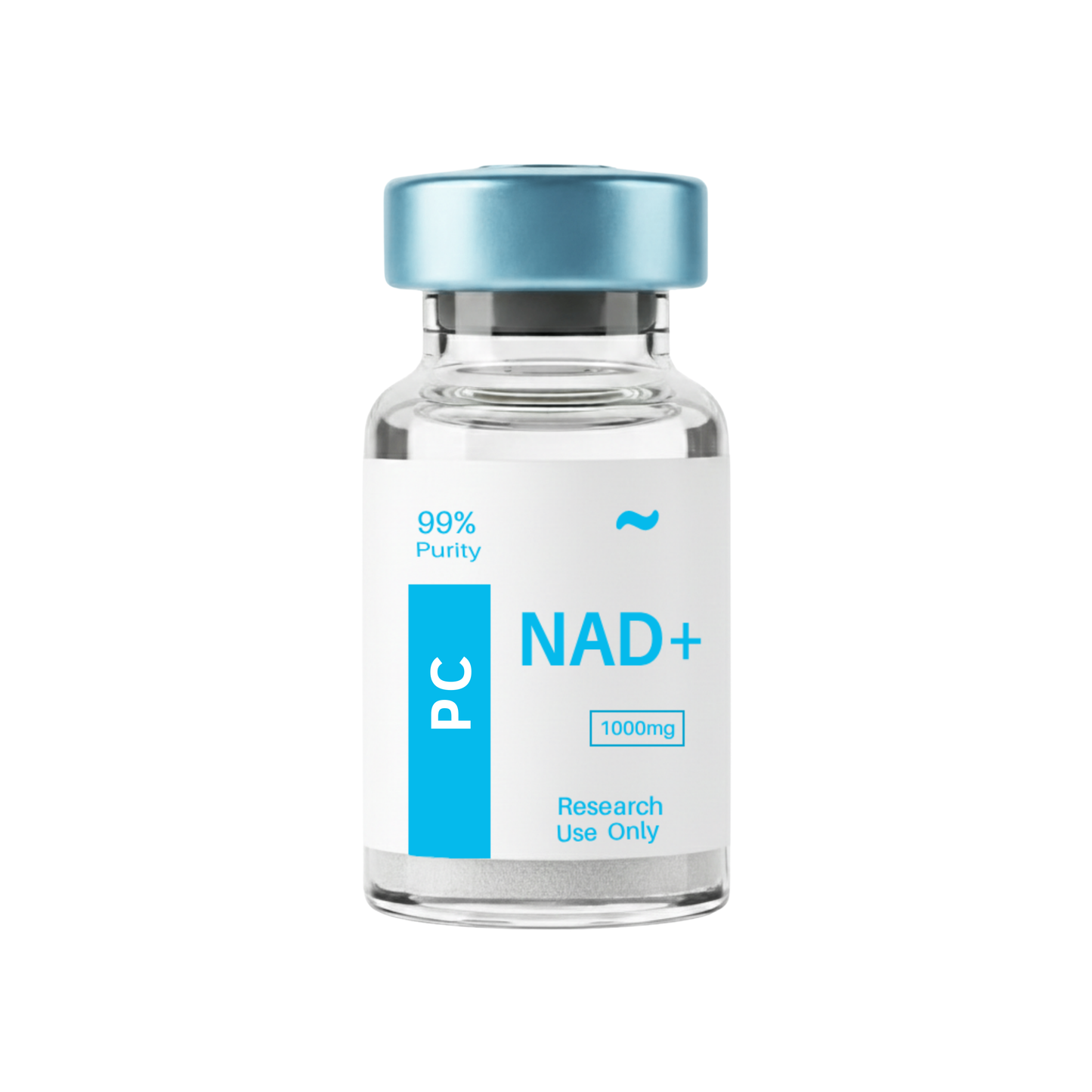
NAD+
NAD+
This batch of NAD+ (Nicotinamide Adenine Dinucleotide) Peptide has been third party lab tested and verified for quality.
Contents: NAD+
Form: Powder
Purity: 99.6%
Couldn't load pickup availability
Free Reconstitution Solution automatically added to your cart with each order.
This product is Made, Tested & Shipped From Canada.
Ships Today
Order by 1:00 PM EST
Free Shipping
For 2 or more vials
Verified+

NAD+ Peptide
NAD+, or nicotinamide adenine dinucleotide, represents the oxidized form of NADH. Its primary biological function is to act as a crucial electron carrier between biochemical reactions, facilitating the movement of energy within cells and, in certain conditions, to extracellular environments. Beyond its essential role in energy metabolism, NAD+ is deeply involved in controlling enzyme activity, mediating posttranslational protein modifications, and supporting intercellular communication. As an extracellular signaling molecule, NAD+ release has been noted from neurons in various tissues, including blood vessels, the bladder, the large intestine, and specific regions of the brain.
NAD+ Peptide Overview
Scientific data indicates that Nicotinamide Adenine Dinucleotide (NAD+) functions as a critical coenzyme for several enzyme families that regulate essential cellular processes related to metabolism, DNA repair, and cell signaling.
Enzyme Family
Functional Pathway
Impact of NAD+
Sirtuins (SIRTs)
Stress adaptation, Mitochondrial health
Deacetylation of proteins, influencing gene stability and cellular lifespan.
Poly(ADP-ribose) Polymerases (PARPs)
Genome maintenance, DNA repair
Cleaves NAD+ to build poly(ADP-ribose) chains, recruiting repair factors.
Cyclic ADP Ribose Synthetases (cADPRS)
Intracellular signaling, Calcium release
Catalyzes NAD+ to form a messenger molecule for calcium regulation.
Sirtuin (SIRT) Deacetylase Enzymes: These enzymes play a central role in regulating gene expression, energy metabolism, and cellular stress responses. By removing acetyl groups from target proteins in an NAD+-dependent manner, sirtuins influence inflammation, aging, and mitochondrial function. Elevated sirtuin activity is linked to enhanced longevity, improved metabolic efficiency, and protection against oxidative damage.
Poly(ADP-ribose) Polymerase (PARP) Enzymes: PARP enzymes are key to maintaining genomic stability by detecting and repairing DNA damage. They utilize NAD+ to form poly(ADP-ribose) chains that recruit repair proteins to damaged sites. Conversely, excessive PARP activation can rapidly deplete NAD+ reserves, disrupting cellular energy balance—a condition associated with certain metabolic and neurodegenerative diseases.
Cyclic ADP Ribose Synthetase (cADPRS): These enzymes are responsible for generating cyclic ADP-ribose, a powerful secondary messenger that governs intracellular calcium signaling. Calcium release mediated by cADPRS affects vital processes such as neurotransmission, muscle contraction, and hormone secretion, highlighting the critical, indirect role of NAD+ in physiological regulation.
Because these critical enzymatic systems rely heavily on NAD+, researchers emphasize that excessive metabolic demand or overactivation of these pathways can quickly reduce NAD+ availability. This potential depletion can limit the cell’s capacity for energy production and effective repair. Maintaining an optimal equilibrium between NAD+ synthesis and utilization is therefore vital for sustaining the beneficial effects of these biochemical networks.
NAD+ Peptide Structure
NAD+ Peptide Research
Scientific Evidence on NAD+-Dependent Interactions
Current research highlights several key biological interactions involving Nicotinamide Adenine Dinucleotide (NAD+) that play crucial roles in maintaining cellular health, regulating metabolism, and supporting repair mechanisms:
- Sirtuins (SIRTs): These NAD+-dependent enzymes are vital for preserving mitochondrial function, regulating energy balance, and promoting stem cell longevity and regeneration. Sirtuins have also been shown to protect against oxidative stress and neural degeneration, suggesting their potential involvement in neuroprotection and age-related disease prevention.
- Poly(ADP-ribose) Polymerases (PARPs): The PARP enzyme family, consisting of 17 known members, utilizes NAD+ to generate poly(ADP-ribose) chains that are essential for DNA damage detection and genomic stability. By activating DNA repair pathways, PARPs safeguard cells from genotoxic stress, although excessive activation may deplete NAD+ levels and impair cellular metabolism.
- Cyclic ADP Ribose Synthetases (cADPRS): This enzyme group includes CD38 and CD157, both of which are key immunoregulatory enzymes that catalyze NAD+ hydrolysis. These reactions influence calcium signaling and may support DNA repair, stem cell renewal, and proper cell cycle progression, linking NAD+ metabolism to immune and regenerative processes.
NAD+ Peptide and DNA Repair Following Ischemic Stress
In neuronal culture models exposed to ischemic stress, restoration of NAD+ levels has been shown to enhance DNA base-excision repair mechanisms, promote cell survival, and improve the repair of oxidative DNA damage. These effects occur whether NAD+ is administered before or after the stress event. Mechanistically, PARP enzymes utilize NAD+ to catalyze ADP-ribosylation (PARylation), a process that recruits and activates DNA repair proteins essential for genomic stability. However, excessive DNA damage can lead to PARP overactivation, which rapidly consumes NAD+ stores and disrupts other metabolic processes dependent on this molecule. Supplementation of NAD+ under such conditions may help counteract depletion, restore cellular energy balance, and support effective DNA repair and neuronal survival.
NAD+ Peptide in Liver and Kidney Protection
Experimental studies in animal models demonstrate that increasing circulating NAD+ concentrations provides protective metabolic and organ-specific benefits. In models of obesity and alcoholic liver disease, NAD+ elevation was linked to improved glucose regulation, enhanced mitochondrial efficiency, and overall better liver function. In aged kidney cells, NAD+ supplementation was shown to boost sirtuin (SIRT) enzyme activity and mitigate glucocorticoid-induced hypertrophy, supporting renal cellular resilience. Furthermore, administration of NAD+ precursors such as nicotinamide mononucleotide (NMN) has yielded similar results, reducing oxidative stress and protecting against cisplatin-induced nephrotoxicity. These findings highlight NAD+’s broad potential in promoting organ repair and metabolic homeostasis.
NAD+ Peptide and Skeletal Function
In studies involving aged mice, seven days of nicotinamide mononucleotide (NMN) administration led to higher ATP production, decreased inflammation, and improved mitochondrial efficiency within skeletal tissue. These results align with NAD+’s established role as a redox cofactor in cellular energy metabolism. During glycolysis and the citric acid cycle, NAD+ accepts electrons to form NADH, which subsequently donates these electrons through the mitochondrial respiratory chain. This electron transfer drives oxidative phosphorylation, facilitating the continuous production of ATP required for muscular energy and endurance.
NAD+ Peptide and Cardiac Function
Deficiency of NAD+ has been correlated with diminished sirtuin (SIRT) activity, contributing to impaired mitochondrial energy generation and vascular dysfunction, including aortic constriction. In preclinical mouse studies, administration of NMN approximately 30 minutes before induced ischemic injury provided measurable cardioprotective effects, reducing tissue damage and supporting cardiac recovery. These findings suggest that maintaining adequate NAD+ availability is vital for optimal heart energy metabolism and resilience to ischemic stress.
Article Author
This literature review was compiled, edited, and organized by Dr. Shin-Ichiro Imai, M.D., Ph.D.
Dr. Imai is a distinguished molecular biologist and longevity researcher best known for his groundbreaking work on NAD+ metabolism and sirtuin biology. As a Professor at Washington University School of Medicine in St. Louis, he has made pioneering contributions to understanding how NAD+ biosynthesis and signaling pathways influence aging, metabolic balance, and mitochondrial health. His research has provided a critical framework for the development of NAD+-enhancing compounds aimed at promoting cellular resilience and healthy aging.
Scientific Journal Author
Dr. Shin-Ichiro Imai has led extensive investigations into the molecular regulation of NAD+ synthesis and sirtuin activity, shedding light on their vital roles in energy metabolism, DNA repair, and mitochondrial function. His findings—together with those of noted collaborators such as Dr. David A. Sinclair, Dr. Nady Braidy, Dr. Charles Brenner, Dr. Eric F. Fang, and Dr. Vilhelm A. Bohr—have substantially advanced current knowledge of NAD+’s function in neuroprotection, metabolic regulation, and age-related disease prevention.
Dr. Imai and his collaborators are recognized as leading contributors to the scientific foundation of modern NAD+ research. This citation is intended solely to acknowledge their academic contributions and is not an endorsement or promotion of this product. Montreal Peptides Canada maintains no professional affiliation, sponsorship, or collaboration with Dr. Imai or any of the researchers referenced herein.
Reference Citations
- Schultz, Michael B, and David A Sinclair. "Why NAD+ Declines during Aging: It's Destroyed." Cell metabolism vol. 23,6 (2016): 965- 966. https://www.ncbi.nlm.nih.gov/pmc/articles/PMC5088772/
- Braidy N, Liu Y. NAD+ therapy in age-related degenerative disorders: A benefit/risk analysis. Exp Gerontol. 2020 Apr;132:110831. doi: 10.1016/j.exger.2020.110831. https://pubmed.ncbi.nlm.nih.gov/31917996/
- Johnson, Sean, and Shin-Ichiro Imai. "NAD+ biosynthesis, aging, and disease." F1000Research vol. 7 132. 1 Feb 2018. https://www.ncbi. nlm.nih.gov/pmc/articles/PMC5795269/
- Bieganowski P, Brenner C. Discoveries of nicotinamide riboside as a nutrient and conserved NRK genes establish a Preiss-Handler in- dependent route to NAD+ in fungi and humans. Cell. 2004 May 14;117(4):495-502. https://pubmed.ncbi.nlm.nih.gov/15137942/
- Fang, E. F., Lautrup, S., Hou, Y., Demarest, T. G., Croteau, D. L., Mattson, M. P., & Bohr, V. A. (2017). NAD+ in Aging: Molecular Mechanisms and Translational Implications. Trends in molecular medicine, 23(10), 899-916. https://www.ncbi.nlm.nih.gov/pmc/articles/P MC7494058/
- Harden, A; Young, WJ (24 October 1906). "The alcoholic ferment of yeast-juice Part II.--The coferment of yeast-juice". Proceedings of the Royal Society of London. Series B, Containing Papers of a Biological Character. 78 (526): 369-375. https://royalsocietypublishing.or g/doi/10.1098/rspb.1906.0070
- Mills KF, Yoshida S, Stein LR, Grozio A, Kubota S, Sasaki Y, Redpath P, Migaud ME, Apte RS, Uchida K, Yoshino J, Imai SI. Long-Term Administration of Nicotinamide Mononucleotide Mitigates Age-Associated Physiological Decline in Mice. Cell Metab. 2016 Dec 13;24(6):795-806. https://pubmed.ncbi.nlm.nih.gov/28068222/
- Long AN, Owens K, Schlappal AE, Kristian T, Fishman PS, Schuh RA. Effect of nicotinamide mononucleotide on brain mitochondrial respiratory deficits in an Alzheimer's disease-relevant murine model. BMC Neurol. 2015 Mar 1;15:19. https://pubmed.ncbi.nlm.nih.gov/25 884176/
- Safety & Efficacy of Nicotinamide Riboside Supplementation for Improving Physiological Function in Middle-Aged and Older Adults. h ttps://clinicaltrials.gov/ct2/show/NCT02921659
- Braidy N, Liu Y. NAD+ therapy in age-related degenerative disorders: A benefit/risk analysis. Exp Gerontol. 2020 Apr;132:110831. https:// pubmed.ncbi.nlm.nih.gov/31917996/
- Wang S, Xing Z, Vosler PS, Yin H, Li W, Zhang F, Signore AP, Stetler RA, Gao Y, Chen J. Cellular NAD replenishment confers marked neuroprotection against ischemic cell death: role of enhanced DNA repair. Stroke. 2008 Sep;39(9):2587-95. https://pubmed.ncbi.nlm.ni h.gov/18617666/
- Rajman, Luis et al. "Therapeutic Potential of NAD-Boosting Molecules: The In Vivo Evidence." Cell metabolism vol. 27,3 (2018): 529- 547. https://www.ncbi.nlm.nih.gov/pmc/articles/PMC6342515/
- Heer C, et al, Coronavirus infection and PARP expression dysregulate the NAD metabolome: An actionable component of innate im- munity. Journal of Biological Chemistry. Volume 295, Issue 52, Dec 2020. https://www.jbc.org/article/S0021-9258(17)50676-6/fulltext
- Mehmel, Mario et al. "Nicotinamide Riboside-The Current State of Research and Therapeutic Uses." Nutrients vol. 12,6 1616. 31 May. 2020, doi:10.3390/nu12061616 https://www.ncbi.nlm.nih.gov/pmc/articles/PMC7352172/
- Leung A, Todorova T, Chang P. Poly(ADP-ribose) regulates post-transcriptional gene regulation in the cytoplasm. RNA Biol. 2012 May;9(5):542-8. doi: 10.4161/rna.19899. Epub 2012 May 1. PMID: 22531498; PMCID: PMC3495734.
ALL ARTICLES AND PRODUCT INFORMATION PROVIDED ON THIS WEBSITE ARE FOR INFORMATIONAL AND EDUCATIONAL PURPOSES ONLY.
The products offered on this website are furnished for in-vitro studies only. In-vitro studies (Latin: in glass) are performed outside of the body. These products are not medicines or drugs and have not been approved by the FDA to prevent, treat or cure any medical condition, ailment or disease. Bodily introduction of any kind into humans or animals is strictly forbidden by law.
STORAGE
Storage Instructions
All products are generated via lyophilization (freeze-drying), a process that ensures stability during shipping for approximately 3-4 months.
After reconstitution with bacteriostatic water, peptides must be stored in a refrigerator to maintain their effectiveness, remaining stable for up to 30 days.
Lyophilization, or cryodesiccation, is a specialized dehydration method where peptides are frozen and subjected to low pressure. This causes water to sublimate directly from solid ice to gas, resulting in a stable, white crystalline structure, the lyophilized peptide. The resulting powder can be safely stored at room temperature until it is reconstituted.
For extended storage lasting months to years, the peptides should be stored in a freezer at -80°C (-112°F). This condition is recommended for maintaining the peptide’s structural integrity and ensuring long-term stability.
Upon receipt, keep peptides cool and protected from light. For short-term use (days, weeks, or months), refrigeration below 4°C (39°F) is adequate. Lyophilized peptides typically remain stable at room temperature for several weeks, which is acceptable for shorter storage periods before use.
Best Practices For Storing Peptides
Proper storage is essential for maintaining the accuracy and reliability of laboratory results, preventing degradation, oxidation, and contamination, which ultimately extends the peptide's shelf life and preserves its integrity.
- Upon receipt, peptides should be kept cool and shielded from light.
- Short-term storage (days to several months): Refrigeration below 4°C (39°F) is suitable. Lyophilized peptides are generally stable at room temperature for several weeks, acceptable for shorter storage durations.
- Long-term storage (several months or years): Store in a freezer at -80°C (-112°F) for optimal stability and to prevent structural degradation.
It is critical to minimize freeze-thaw cycles, as these fluctuations can accelerate degradation. Frost-free freezers must be avoided because their automatic defrosting cycles introduce temperature variations that compromise peptide stability.
Preventing Oxidation and Moisture Contamination
Protecting peptides from air and moisture exposure is paramount for stability. Moisture contamination is a risk when removing cold peptides from a freezer. Always allow the vial to reach room temperature before opening to prevent condensation from forming on the cold peptide or inside the container.
Minimizing air exposure is also vital. Keep the container closed as much as possible, and promptly reseal it after removing the required amount. Storing the remaining peptide under a dry, inert gas atmosphere (like argon or nitrogen) can further prevent oxidation. Peptides with cysteine (C), methionine (M), or tryptophan (W) residues are particularly vulnerable to air oxidation and require extra care.
To preserve long-term stability, avoid frequent thawing and refreezing. The best practice is to divide the total peptide quantity into smaller aliquots for individual experimental use, which prevents repeated exposure to air and temperature changes.
Storing Peptides In Solution
Peptide solutions have a much shorter shelf life than lyophilized forms and are more prone to bacterial breakdown. Peptides containing cysteine (Cys), methionine (Met), tryptophan (Trp), aspartic acid (Asp), glutamine (Gln), or N-terminal glutamic acid (Glu) residues degrade more quickly when dissolved.
If storing in solution is necessary, use sterile buffers with a pH between 5 and 6. Aliquoting the solution is recommended to minimize freeze-thaw cycles. Most peptide solutions stored under refrigerated conditions at 4°C (39°F) remain stable for up to 30 days. However, less stable peptides should be kept frozen when not in immediate use.
Peptide Storage Containers
Containers for peptide storage must be clean, clear, durable, and chemically resistant, and appropriately sized to minimize excess air space. Glass and plastic vials (polystyrene or polypropylene) are suitable.
- Polystyrene vials are clear but have limited chemical resistance.
- Polypropylene vials are more chemically resistant but usually translucent.
- High-quality glass vials offer the best combination of clarity, stability, and chemical inertness.
Peptides are often shipped in plastic vials to prevent breakage. They can be safely transferred between glass and plastic vials as needed for specific storage or handling requirements.
Peptide Storage Guidelines: General Tips
To maintain stability and prevent degradation, adhere to these best practices:
- Store peptides in a cold, dry, and dark environment.
- Avoid repeated freeze-thaw cycles.
- Minimize air exposure to reduce oxidation risk.
- Protect peptides from light.
- Do not store peptides in solution long term; keep them lyophilized whenever possible.
- Aliquot peptides based on experimental needs to prevent unnecessary handling.
Certificate of Analysis (COA): Lab report for this product purity, identity, and chromatograms.
-

HIGHEST QUALITY PEPTIDES
Our products are scientifically formulated and manufactured in cGMP-compliant facilities.
-

FAST DELIVERY
Enjoy fast and reliable 3–5 day shipping.
-

Dedicated Customer Service
Our customer service team is highly knowledgeable in peptide research and its applications. We’re available 24/7 to assist you.
Verified reviews
Tested. Verified. Trusted.
We take a laboratory-first approach to quality. Each batch is made under controlled conditions and verified by an independent lab (HPLC/MS). We only ship batches that test ≥99% purity, and we provide a full COA, including identity, methods, and chromatograms, for your review.
Shop now
See the Process for Yourself
We make our peptides in our own cGMP lab. Watch the video to see how every vial is produced, tested, and handled with care.
Science Behind Our Peptides
A clear explanation of how our peptides work, their benefits, why quality matters for best results, and what you should know.
You may also like
-
SAVE 25%Reconstitution Solution
Regular price $15.00Regular price $15.00 Sale priceUnit price / per$20.0025% -
Gonadorelin - Research Grade Peptide Hormone
Regular price $50.00Regular price $50.00 Sale priceUnit price / per$67.0025% -
SAVE 23%Semaglutide
Regular price From $36.00Regular price From $36.00 Sale priceUnit price / per$47.0023% -
SAVE 26%Sterile Water
Regular price From $14.00Regular price From $14.00 Sale priceUnit price / per$19.0026% -
SAVE 24%Lipo-C with B Vitamins
Regular price $85.00Regular price $85.00 Sale priceUnit price / per$112.0024% -
SAVE 23%Lemon Bottle 10mg
Regular price $80.00Regular price $80.00 Sale priceUnit price / per$105.0023% -
SAVE 23%L-Carnitine
Regular price $97.00Regular price $97.00 Sale priceUnit price / per$127.0023% -
SAVE 24%Dermorphin
Regular price $56.00Regular price $56.00 Sale priceUnit price / per$74.0024% -
SAVE 26%Benzyl Alcohol 0.9%
Regular price From $14.00Regular price From $14.00 Sale priceUnit price / per$19.0026% -
SAVE 26%BAC Bacteriostatic Water
Regular price From $14.00Regular price From $14.00 Sale priceUnit price / per$19.0026% -
SAVE 26%Acetic Acid Water 0.6%
Regular price From $14.00Regular price From $14.00 Sale priceUnit price / per$19.0026% -
SAVE 23%Tesamorelin
Regular price From $80.00Regular price From $80.00 Sale priceUnit price / per$105.0023% -
SAVE 23%Sermorelin
Regular price From $70.00Regular price From $70.00 Sale priceUnit price / per$92.0023% -
SAVE 23%Ipamorelin
Regular price From $32.00Regular price From $32.00 Sale priceUnit price / per$42.0023% -
SAVE 25%Epitalon (Epithalon)
Regular price From $50.00Regular price From $50.00 Sale priceUnit price / per$67.0025% -
SAVE 23%CJC-1295 with DAC
Regular price $139.00Regular price $139.00 Sale priceUnit price / per$182.0023% -
SAVE 23%CJC-1295 (No DAC)
Regular price From $75.00Regular price From $75.00 Sale priceUnit price / per$98.0023% -
SAVE 23%CJC-1295 No DAC & Ipamorelin
Regular price $95.00Regular price $95.00 Sale priceUnit price / per$124.0023% -
SAVE 23%Glutathione
Regular price $83.00Regular price $83.00 Sale priceUnit price / per$109.0023% -
SAVE 24%Hyaluronic Acid
Regular price $28.00Regular price $28.00 Sale priceUnit price / per$37.0024% -
SAVE 25%Melanotan II (MT2)
Regular price $50.00Regular price $50.00 Sale priceUnit price / per$67.0025% -
SAVE 23%HCG - Premium Research Peptide
Regular price From $72.00Regular price From $72.00 Sale priceUnit price / per$94.0023% -
Gonadorelin - Premium Research Peptide
Regular price $50.00Regular price $50.00 Sale priceUnit price / per$67.0025% -
SAVE 24%HMG 75iu - Premium Research Peptide
Regular price $80.00Regular price $80.00 Sale priceUnit price / per$106.0024% -
SAVE 26%Oxytocin Acetate
Regular price $42.00Regular price $42.00 Sale priceUnit price / per$57.0026% -
Kisspeptin-10 - Premium Research Peptide
Regular price From $65.00Regular price From $65.00 Sale priceUnit price / per$85.0023% -
SAVE 24%KPV Tripeptide
Regular price From $56.00Regular price From $56.00 Sale priceUnit price / per$74.0024% -
KLOW Blend - GHK-CU + TB-500 + BPC-157 + KPV 10mg
Regular price $200.00Regular price $200.00 Sale priceUnit price / per$261.0023% -
SAVE 23%Glow BPC-157 + GHK-CU + TB-500
Regular price $139.00Regular price $139.00 Sale priceUnit price / per$181.0023% -
SAVE 23%BPC-157 + TB-500 + GHK-Cu
Regular price $155.00Regular price $155.00 Sale priceUnit price / per$202.0023% -
SAVE 23%BPC-157 + TB-500
Regular price From $97.00Regular price From $97.00 Sale priceUnit price / per$127.0023% -
SAVE 24%IGF-1 LR3 (Long R3)
Regular price From $40.00Regular price From $40.00 Sale priceUnit price / per$53.0024% -
SAVE 23%5-Amino-1MQ
Regular price $80.00Regular price $80.00 Sale priceUnit price / per$105.0023% -
SAVE 25%Tirzepatide
Regular price From $50.00Regular price From $50.00 Sale priceUnit price / per$67.0025% -
SAVE 23%Survodutide
Regular price $299.00Regular price $299.00 Sale priceUnit price / per$392.0023%
Every vial we sell comes from a lab that follows current Good Manufacturing Practices (cGMP). That means each step of production is documented and controlled. Before a batch is released, it’s tested by independent third-party labs for purity, identity, and sterility. Certificates of analysis are available so you can see the exact test results.
Yes. The labs we work with use ISO-certified clean rooms where air quality, equipment, and handling procedures are tightly regulated. Staff are trained to pharmaceutical-grade standards. This ensures the peptides are produced in an environment that minimizes contamination risks.
Peptides in lyophilized (freeze-dried) form are stable at room temperature for transport. Once you receive them, refrigeration is recommended to maintain long-term integrity. We package every order securely to prevent damage and ship promptly, so your vials arrive in optimal condition.
We operate under strict in-house protocols that follow current Good Manufacturing Practices (cGMP). That means our team oversees the entire process from sourcing raw amino acids to the final lyophilized vial. Nothing is outsourced or repackaged. This gives us full control over purity, consistency, and sterility, and it’s why we can stand behind every single vial we ship.
Store them in the refrigerator, away from direct light and heat. If you need to keep them longer, some peptides can be stored frozen. Each vial comes with clear handling instructions so you know the proper conditions for stability.
The strongest proof is transparency. For every peptide, we can provide certificates of analysis, manufacturing documentation, and references to the published scientific research behind it. If you ever have questions, we’ll show you the data rather than ask you to take our word for it.
The difference is transparency. Most sites give you a product name and a price. We provide full batch testing, lab documentation, and direct access to certificates of analysis so you don’t have to guess what you’re getting. When you order from us, you know exactly what’s in the vial, where it was made, and how it was verified.