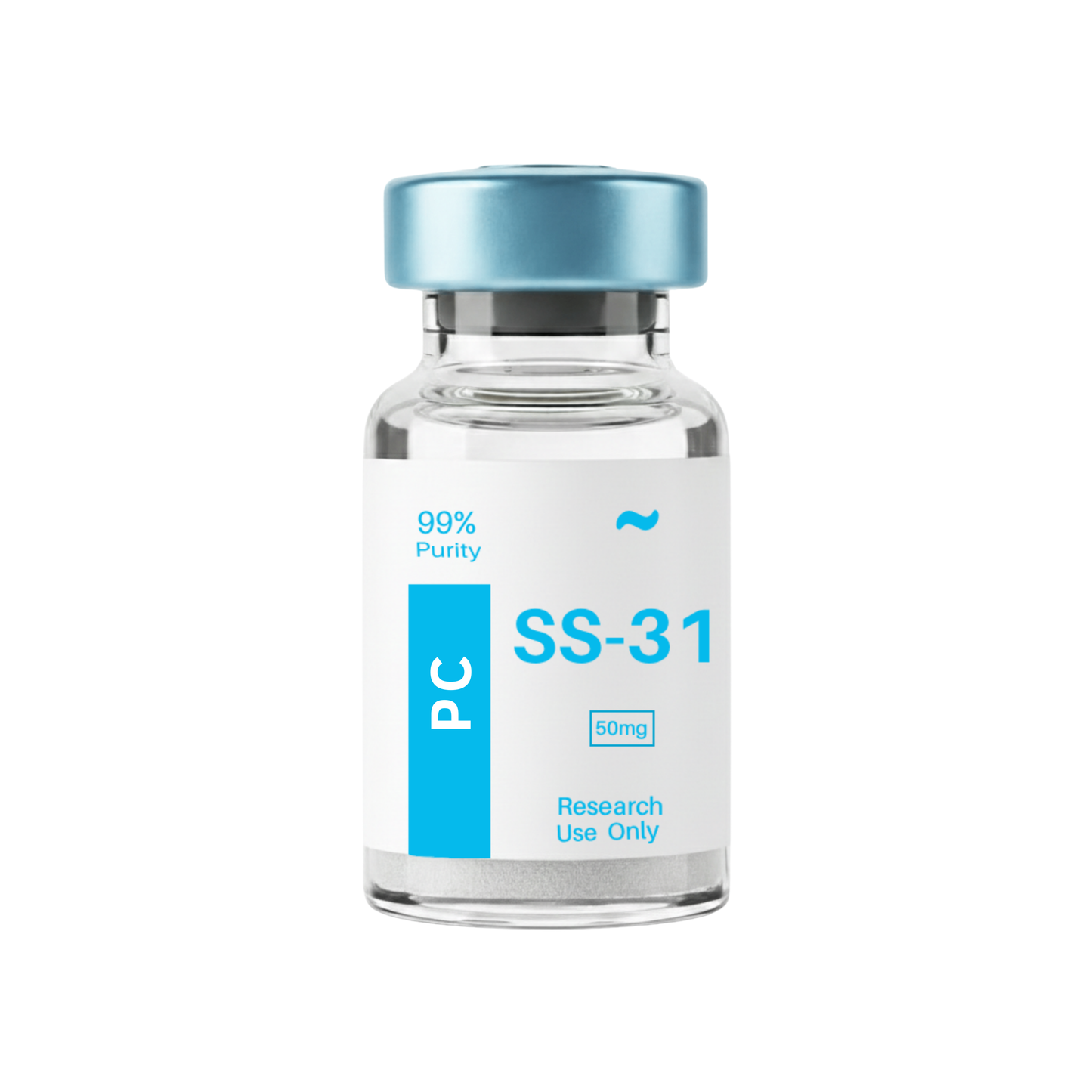
SS-31
SS-31
This batch of SS-31 (Elamipretide) Mitochondrial Peptide has been third party lab tested and verified for quality.
Contents: SS-31
Form: Powder
Purity: 99.5%
Couldn't load pickup availability
Free Reconstitution Solution automatically added to your cart with each order.
This product is Made, Tested & Shipped From Canada.
Ships Today
Order by 1:00 PM EST
Free Shipping
For 2 or more vials
Verified+

SS-31 Peptide - 10mg
SS-31 (Elamipretide) is a synthetic, mitochondria-targeted tetrapeptide explicitly engineered to penetrate cellular and organelle membranes, achieving high concentration at the inner mitochondrial membrane. Its core mechanism involves the highly selective binding and stabilization of cardiolipin, a crucial phospholipid indispensable for the architecture and high-efficiency function of the electron transport chain (ETC), the cellular system that generates the majority of the cell’s energy, ATP.
By supporting cardiolipin and optimizing ETC function, SS-31 is theorized to significantly reduce the aberrant production of detrimental reactive oxygen species (ROS), or free radicals. Impairment of cardiolipin structure is strongly linked to the pathology of various human conditions, including neurodegenerative diseases, cardiovascular failure, and metabolic disorders. SS-31 holds a significant place in research as it was one of the first peptides of its class to enter advanced human clinical trials for primary mitochondrial myopathy, underscoring its pioneering role in mitochondrial medicine research.
SS-31 Peptide - 10mg Overview
SS-31 (Elamipretide) is a specialized synthetic tetrapeptide with the defined sequence D-Arg-Dmt-Lys-Phe-NH2. It was meticulously synthesized for its powerful and selective binding affinity for cardiolipin, the unique anionic phospholipid found exclusively in the inner mitochondrial membrane. Extensive research on SS-31 focuses on its potential to address core drivers of cellular aging and disease: chronic oxidative stress and pervasive mitochondrial dysfunction.
The peptide's small molecular size, cationic charge, and aromatic residues enable its rapid and targeted transport into the mitochondria. Once bound to cardiolipin, SS-31 acts to stabilize the cristae structure, which facilitates more efficient electron transfer, leading to a substantial reduction in pathological ROS formation and a measurable boost in overall ATP synthesis. Importantly, SS-31 functions as a bioenergetic modulator that improves the intrinsic efficiency and structural integrity of the electron transport chain, setting it apart from non-specific chemical antioxidants. This highly targeted approach makes SS-31 an invaluable research tool for investigations into neuroprotection, cardioprotection, and age-related cellular mechanisms.
SS-31 Peptide Structure
SS-31 is a synthetic tetrapeptide (four amino acids) precisely engineered to confer its targeted activity at the mitochondria.
- Structure Formula (Linear): D-Arg - Dmt - Lys - Phe - NH2
- Molecular Formula: C36H55N7O7
- Molecular Weight: 710.87 g/mol
The molecular structure incorporates the D-amino acid D-Arginine at the N-terminus and the non-standard aromatic residue Dimethyltyrosine (Dmt). This configuration is essential for the peptide's ability to traverse biological membranes and selectively interact with the anionic cardiolipin of the inner mitochondrial membrane, which underpins its function as a powerful regulator of mitochondrial bioenergetics.
SS-31 Peptide Research
Mitochondria Improvement
Primary Mitochondrial Diseases (PMDs) are common inherited metabolic disorders stemming from deficiencies in the mitochondrial energy generation machinery. Because of their high metabolic demands, organs such as the heart, nervous system, and skeletal muscle are the most vulnerable, resulting in debilitating symptoms like chronic fatigue and impaired exercise capacity.
The defining characteristic of PMDs is a critical deficiency in ATP production. Initial preclinical studies using SS-31 in animal models of acute mitochondrial damage (e.g., kidney ischemia-reperfusion injury) demonstrated that treatment could accelerate the recovery of ATP levels, preserve tissue viability, and significantly reduce cell death. Further research confirmed that SS-31’s cardiolipin-targeting mechanism is effective in mitigating mitochondrial disease symptoms, suggesting broad utility across both inherited and age-related mitochondrial decline.
The strength of this preclinical evidence led the FDA to grant Orphan Drug Status to SS-31, facilitating its progression to human clinical trials. Phase II human trials confirmed its safety profile and showed a measurable enhancement in exercise performance within five days. While subsequent Phase III trials did not meet their pre-specified primary endpoints, many experts in the field suggest this outcome was likely due to non-optimal trial design and endpoint selection. Active research continues through ongoing Phase II and planned Phase III studies, and SS-31 remains accessible to patients lacking alternative treatments through compassionate use programs, based on its established safety record.
Research Focus
Key Experimental Findings (Preclinical/Clinical)
Proposed Mechanism of Action
Mitochondrial Health
Accelerated ATP recovery, improved exercise capacity, reduced cell death in ischemic injury
Stabilization of cardiolipin, enhanced ETC efficiency, cristae structural integrity
Cardiovascular Ischemia
Improved left ventricular function, increased mitochondrial oxygen flux, reduced HtrA2 (apoptosis)
Metabolic optimization of cardiac muscle, anti-apoptotic and tissue-sparing effects
Metabolic Health (Diabetes)
Decreased Reactive Oxygen Species (ROS) generation, elevated SIRT1 expression
Mitigation of oxidative stress, potential to improve insulin sensitivity and decrease inflammation
Cellular Inflammation
Downregulation of FIS1, inhibition of NF-kappaB p65 signaling
Modulation of cellular redox state, suppression of chronic inflammation mediated by mitochondria
Ischemia
SS-31 shows substantial research promise for conditions involving cardiac damage, particularly heart failure, where mitochondrial dysfunction is a recognized accelerator of disease progression. Studies on human heart tissue demonstrated that SS-31 treatment significantly increased mitochondrial oxygen consumption and boosted the activity of key ATP-generating enzymes. This research suggested that SS-31 may utilize multiple, independent pathways to support mitochondrial function beyond its known cardiolipin stabilization.
In large animal models (canines) of advanced heart failure, chronic SS-31 administration resulted in verifiable improvements in left ventricular function. The strong correlation between enhanced mitochondrial respiration and improved cardiac performance supports SS-31's potential as a long-term metabolic strategy for optimizing heart cell energy and mitigating pathological cardiac remodeling. Furthermore, clinical investigations of SS-31 in acute myocardial infarction (STEMI) patients observed a reduction in HtrA2 levels, a biomarker for cardiomyocyte apoptosis, suggesting a role in limiting the extent of heart muscle damage following an acute event.
Diabetes
Type 2 diabetes is a complex metabolic disorder where mitochondrial dysfunction plays a critical role, notably by driving the oxidative stress that results in long-term microvascular complications. Research focused on improving mitochondrial health represents a major strategy for mitigating diabetic complications.
A human study demonstrated that SS-31 treatment led to a measurable reduction in reactive oxygen species (ROS) production, indicating its ability to alleviate the oxidative stress linked to mitochondrial impairment in diabetes. This effect is crucial for studies targeting microvascular disease progression. The same research also observed that SS-31 elevated levels of SIRT1, a protein that has been associated with improved insulin sensitivity and reduced inflammatory responses in Type 2 diabetes models.
Reduces Inflammation
A consistent theme in SS-31 research is its potent anti-inflammatory activity, primarily achieved through its regulation of reactive oxygen species (ROS) and chronic oxidative stress. In vitro cell culture experiments indicate that SS-31 reduces inflammation by downregulating FIS1 expression, a mitochondrial fission protein implicated in chronic inflammation and neurodegenerative processes.
Further evidence from in vivo mouse models shows that SS-31 suppresses key inflammatory mediators, including the cytokine CD-36, inhibits NADPH oxidase activity, and dampens the critical inflammatory transcription factor NF-kappaB p65 signaling. The suppression of NF-kappaB, a master regulator of persistent cellular inflammation, alongside other key biomarkers, reinforces SS-31’s classification as a powerful, targeted agent for studies focused on mitochondrial-driven inflammation.
SS-31 Summary
SS-31 initially gained prominence for its precise regulatory effect on mitochondrial function in inherited diseases. However, the expanding research strongly supports its broader potential in combating mitochondria-driven inflammation and oxidative stress. The peptide remains a central molecule of study for its ability to consistently enhance mitochondrial efficiency and significantly boost ATP production, thereby optimizing overall cellular bioenergetic health.
Despite the challenges faced in early Phase III clinical trials, many experts attribute the outcomes to methodological issues and non-optimal endpoint selection. With robust Phase II and planned Phase III studies underway, SS-31 continues to be a vital compound. It is expected to play a substantial role in advancing our knowledge of mitochondrial pathology and contribute to the development of next-generation therapies for a wide range of neurodegenerative, cardiovascular, and metabolic conditions.
Article Author
This review was researched, compiled, and formatted by Dr. Bruce H. Cohen, M.D., Ph.D. Dr. Cohen is a distinguished and internationally respected authority in the field of mitochondrial medicine and neurodevelopmental disorders. As the Director of the Neurodevelopmental Science Center at Akron Children’s Hospital, he has made influential contributions to the clinical study and therapeutic approaches for mitochondrial dysfunction. His research is focused on the critical translation of fundamental mitochondrial science into practical strategies aimed at improving cellular energy metabolism and patient care.
Scientific Journal Author
Dr. Hazel H. Szeto, M.D., Ph.D., is the principal investigator credited with the original discovery and development of the mitochondrial-targeted peptide SS-31 (Elamipretide). Her pioneering research has been fundamental to establishing the scientific principles governing cardiolipin stabilization, the mitigation of oxidative stress, and the regulation of mitochondrial bioenergetic pathways. Collaborating with researchers such as A.V. Birk, K. Zhao, S. Luo, D.A. Brown, and R.A. Kloner, Dr. Szeto helped build the entire knowledge base that supports SS-31 and its potential applications in cardiovascular, neurodegenerative, and metabolic disorder research.
Acknowledgment: This section is provided exclusively to recognize the significant academic and scientific contributions of Dr. Szeto and her research team. It is not intended to be interpreted as an endorsement or promotional statement for this product. Montreal Peptides Canada asserts no affiliation, sponsorship, or professional relationship with Dr. Szeto or any of the researchers mentioned.
Reference Citations
Szeto HH. First-in-class cardiolipin therapeutic peptide to restore mitochondrial bioenergetics. Br J Pharmacol. 2014;171(8):2029-2050. https://pubmed.ncbi.nlm.nih.gov/24117165/
Birk AV, et al. The mitochondrial-targeted compound SS-31 re-energizes ischemic mitochondria by interacting with cardiolipin. J Am Soc Nephrol. 2013;24(8):1250-1261. https://pubmed.ncbi.nlm.nih.gov/23766545/
Zhao K, et al. A novel peptide antioxidant, SS-31, targets mitochondrial inner membrane cardiolipin. Free Radic Biol Med. 2004;36(12):1656-1667. https://pubmed.ncbi.nlm.nih.gov/15182853/
Szeto HH, et al. Elamipretide (SS-31) improves mitochondrial bioenergetics and cardiac performance. J Mol Cell Cardiol. 2011;52(1):88-97. https://pubmed.ncbi.nlm.nih.gov/21967812/
Manczak M, et al. Mitochondria-targeted antioxidant SS-31 reduces amyloid beta toxicity in Alzheimer's disease models. Hum Mol Genet. 2010;19(11):1952-1964. https://pubmed.ncbi.nlm.nih.gov/20176672/
Campbell MD, et al. SS-31 restores skeletal muscle mitochondrial coupling and improves exercise tolerance in aged mice. Aging Cell. 2019;18(3):e12915. https://pubmed.ncbi.nlm.nih.gov/30907784/
Szeto HH, et al. SS peptides protect mitochondria from oxidative stress and cell death. Free Radic Biol Med. 2011;50(6):720-729. https://pubmed.ncbi.nlm.nih.gov/21172428/
Birk AV, Szeto HH. Mitochondrial-targeted antioxidants: strategies for neuroprotection. Pharmacol Ther. 2011;131(1):33-40. https://pubmed.ncbi.nlm.nih.gov/21334385/
Brown DA, et al. Reduction of oxidative damage to mitochondria by SS-31 peptide. Free Radic Biol Med. 2008;45(3):299–306. https://pubmed.ncbi.nlm.nih.gov/18482700/
Kloner RA, et al. Elamipretide for ischemia/reperfusion injury: a mitochondrial therapeutic approach. Cardiovasc Drugs Ther. 2015;29(6):501-508. https://pubmed.ncbi.nlm.nih.gov/26494551/
Disclaimer: ALL ARTICLES AND PRODUCT INFORMATION PROVIDED ON THIS WEBSITE ARE FOR INFORMATIONAL AND EDUCATIONAL PURPOSES ONLY. The products offered on this website are furnished for in-vitro studies only (Latin: in glass). These products are not medicines or drugs and have not been approved by the FDA to prevent, treat, or cure any medical condition, ailment, or disease. Bodily introduction of any kind into humans or animals is strictly forbidden by law.
Storage
Storage Instructions
All SS-31 peptide products are prepared using lyophilization (freeze-drying), a processing technique that ensures exceptional stability during shipping for a duration of approximately 3 to 4 months. After the peptide is reconstituted with bacteriostatic water, the resulting solution must be stored under refrigeration to maintain its maximum efficacy. The mixed solution is typically stable for a period not exceeding 30 days.
Lyophilization, or cryodesiccation, is a highly controlled dehydration process that involves freezing the peptide followed by exposure to a high vacuum. This method forces the water to sublimate—a direct phase change from ice to vapor—yielding a highly stable, white crystalline powder: the lyophilized peptide. This powder is safe for storage at ambient room temperature until the point of reconstitution. For extended storage requirements—lasting many months to several years—the lyophilized peptide must be preserved in a freezer maintained at -80 degrees C (-112 degrees F). These ultra-cold conditions are critical for preserving the peptide's molecular integrity and guaranteeing long-term stability.
Upon product receipt, it is essential to keep the peptide cool and completely protected from light. For short-term experimental needs (ranging from a few days up to a few months), refrigeration below 4 degrees C (39 degrees F) is entirely suitable. The lyophilized powder retains stability at room temperature for several weeks, which can accommodate shorter periods before use.
Best Practices For Storing Peptides
Strict adherence to proper peptide storage protocols is vital for achieving accurate, reliable, and reproducible laboratory research results. Correct storage protocols are designed to prevent contamination, minimize oxidation, and slow down degradation, thereby maximizing the peptide’s functional lifespan.
- Upon Receipt: Store lyophilized peptides cool and protected from light.
- Short-Term Storage (Days to Months): Refrigerate below 4 degrees C (39 degrees F).
- Long-Term Storage (Months to Years): Freeze at -80 degrees C (-112 degrees F) for optimal preservation.
- Minimize Freeze-Thaw Cycles: Repeated fluctuations in temperature significantly accelerate degradation. Avoid using frost-free freezers as their automatic defrosting cycles introduce damaging temperature variations.
Preventing Oxidation and Moisture Contamination
It is essential to protect peptides from exposure to both atmospheric air and moisture, which are primary destabilizing agents. Moisture contamination is a major risk, particularly when retrieving cold vials from the freezer. To prevent condensation from forming on the peptide powder or inside the container, always allow the vial to fully reach room temperature before opening it.
Minimizing air exposure is equally important. The peptide container must remain sealed as much as possible, and after removing the required amount for research, the vial should be promptly re-sealed. For peptides that are highly susceptible to degradation, storing the remainder under a dry, inert gas atmosphere (such as nitrogen or argon) can offer further protection against oxidation. Peptides containing cysteine (C), methionine (M), or tryptophan (W) residues are particularly prone to air oxidation and must be handled with great care. The most effective strategy for long-term stability is to aliquot the entire peptide stock into smaller, single-use vials. This minimizes repeated exposure to air, temperature changes, and handling, preserving the peptide's integrity over time.
Storing Peptides In Solution
Peptide solutions possess a significantly reduced shelf life and are more vulnerable to both chemical degradation and microbial contamination compared to the lyophilized powder. Peptides containing residues such as cysteine (Cys), methionine (Met), tryptophan (Trp), aspartic acid (Asp), glutamine (Gln), or N-terminal glutamic acid (Glu) are known to degrade more rapidly when stored in a dissolved state.
If storage in solution is necessary for immediate use, it is best to use sterile buffers with a weakly acidic pH between 5 and 6. The solution should be divided into aliquots to reduce the damaging effects of freeze-thaw cycles. When refrigerated at 4 degrees C (39 degrees F), most peptide solutions remain stable for up to 30 days. However, peptides with lower intrinsic stability should be kept frozen until immediate use is required.
Peptide Storage Containers
Storage containers must be clean, durable, and chemically inert, and their size should be appropriate to minimize excess headspace air. High-quality glass vials offer the best overall characteristics for long-term storage, providing clarity, stability, and superior chemical resistance. While glass is preferred, peptides are commonly shipped in plastic vials to prevent breakage during transport. Safe transfer between plastic and glass containers is acceptable to meet specific laboratory storage or handling needs.
Peptide Storage Guidelines: General Tips
To ensure the optimal stability and prevent degradation of peptide products, researchers should consistently adhere to these guidelines:
- Store peptides in a cold, dry, and dark environment.
- Strictly prohibit repeated freeze-thaw cycles to protect molecular integrity.
- Minimize exposure to atmospheric oxygen to reduce the risk of oxidation.
- Protect the product from all light sources at all times.
- Avoid long-term storage of peptides in solution; maintain them in lyophilized form whenever possible.
- Aliquoting is highly recommended to limit unnecessary exposure of the bulk stock to handling and environmental stressors.
-

HIGHEST QUALITY PEPTIDES
Our products are scientifically formulated and manufactured in cGMP-compliant facilities.
-

FAST DELIVERY
Enjoy fast and reliable 3–5 day shipping.
-

Dedicated Customer Service
Our customer service team is highly knowledgeable in peptide research and its applications. We’re available 24/7 to assist you.
Verified reviews
Tested. Verified. Trusted.
We take a laboratory-first approach to quality. Each batch is made under controlled conditions and verified by an independent lab (HPLC/MS). We only ship batches that test ≥99% purity, and we provide a full COA, including identity, methods, and chromatograms, for your review.
Shop now
See the Process for Yourself
We make our peptides in our own cGMP lab. Watch the video to see how every vial is produced, tested, and handled with care.
Science Behind Our Peptides
A clear explanation of how our peptides work, their benefits, why quality matters for best results, and what you should know.
You may also like
-
SAVE 25%Reconstitution Solution
Regular price $15.00Regular price $15.00 Sale priceUnit price / per$20.0025% -
Gonadorelin - Research Grade Peptide Hormone
Regular price $50.00Regular price $50.00 Sale priceUnit price / per$67.0025% -
SAVE 23%Semaglutide
Regular price From $36.00Regular price From $36.00 Sale priceUnit price / per$47.0023% -
SAVE 26%Sterile Water
Regular price From $14.00Regular price From $14.00 Sale priceUnit price / per$19.0026% -
SAVE 24%Lipo-C with B Vitamins
Regular price $85.00Regular price $85.00 Sale priceUnit price / per$112.0024% -
SAVE 23%Lemon Bottle 10mg
Regular price $80.00Regular price $80.00 Sale priceUnit price / per$105.0023% -
SAVE 23%L-Carnitine
Regular price $97.00Regular price $97.00 Sale priceUnit price / per$127.0023% -
SAVE 24%Dermorphin
Regular price $56.00Regular price $56.00 Sale priceUnit price / per$74.0024% -
SAVE 26%Benzyl Alcohol 0.9%
Regular price From $14.00Regular price From $14.00 Sale priceUnit price / per$19.0026% -
SAVE 26%BAC Bacteriostatic Water
Regular price From $14.00Regular price From $14.00 Sale priceUnit price / per$19.0026% -
SAVE 26%Acetic Acid Water 0.6%
Regular price From $14.00Regular price From $14.00 Sale priceUnit price / per$19.0026% -
SAVE 23%Tesamorelin
Regular price From $80.00Regular price From $80.00 Sale priceUnit price / per$105.0023% -
SAVE 23%Sermorelin
Regular price From $70.00Regular price From $70.00 Sale priceUnit price / per$92.0023% -
SAVE 23%Ipamorelin
Regular price From $32.00Regular price From $32.00 Sale priceUnit price / per$42.0023% -
SAVE 25%Epitalon (Epithalon)
Regular price From $50.00Regular price From $50.00 Sale priceUnit price / per$67.0025% -
SAVE 23%CJC-1295 with DAC
Regular price $139.00Regular price $139.00 Sale priceUnit price / per$182.0023% -
SAVE 23%CJC-1295 (No DAC)
Regular price From $75.00Regular price From $75.00 Sale priceUnit price / per$98.0023% -
SAVE 23%CJC-1295 No DAC & Ipamorelin
Regular price $95.00Regular price $95.00 Sale priceUnit price / per$124.0023% -
SAVE 23%Glutathione
Regular price $83.00Regular price $83.00 Sale priceUnit price / per$109.0023% -
SAVE 24%Hyaluronic Acid
Regular price $28.00Regular price $28.00 Sale priceUnit price / per$37.0024% -
SAVE 25%Melanotan II (MT2)
Regular price $50.00Regular price $50.00 Sale priceUnit price / per$67.0025% -
SAVE 23%HCG - Premium Research Peptide
Regular price From $72.00Regular price From $72.00 Sale priceUnit price / per$94.0023% -
Gonadorelin - Premium Research Peptide
Regular price $50.00Regular price $50.00 Sale priceUnit price / per$67.0025% -
SAVE 24%HMG 75iu - Premium Research Peptide
Regular price $80.00Regular price $80.00 Sale priceUnit price / per$106.0024% -
SAVE 26%Oxytocin Acetate
Regular price $42.00Regular price $42.00 Sale priceUnit price / per$57.0026% -
Kisspeptin-10 - Premium Research Peptide
Regular price From $65.00Regular price From $65.00 Sale priceUnit price / per$85.0023% -
SAVE 24%KPV Tripeptide
Regular price From $56.00Regular price From $56.00 Sale priceUnit price / per$74.0024% -
KLOW Blend - GHK-CU + TB-500 + BPC-157 + KPV 10mg
Regular price $200.00Regular price $200.00 Sale priceUnit price / per$261.0023% -
SAVE 23%Glow BPC-157 + GHK-CU + TB-500
Regular price $139.00Regular price $139.00 Sale priceUnit price / per$181.0023% -
SAVE 23%BPC-157 + TB-500 + GHK-Cu
Regular price $155.00Regular price $155.00 Sale priceUnit price / per$202.0023% -
SAVE 23%BPC-157 + TB-500
Regular price From $97.00Regular price From $97.00 Sale priceUnit price / per$127.0023% -
SAVE 24%IGF-1 LR3 (Long R3)
Regular price From $40.00Regular price From $40.00 Sale priceUnit price / per$53.0024% -
SAVE 23%5-Amino-1MQ
Regular price $80.00Regular price $80.00 Sale priceUnit price / per$105.0023% -
SAVE 25%Tirzepatide
Regular price From $50.00Regular price From $50.00 Sale priceUnit price / per$67.0025% -
SAVE 23%Survodutide
Regular price $299.00Regular price $299.00 Sale priceUnit price / per$392.0023%
Every vial we sell comes from a lab that follows current Good Manufacturing Practices (cGMP). That means each step of production is documented and controlled. Before a batch is released, it’s tested by independent third-party labs for purity, identity, and sterility. Certificates of analysis are available so you can see the exact test results.
Yes. The labs we work with use ISO-certified clean rooms where air quality, equipment, and handling procedures are tightly regulated. Staff are trained to pharmaceutical-grade standards. This ensures the peptides are produced in an environment that minimizes contamination risks.
Peptides in lyophilized (freeze-dried) form are stable at room temperature for transport. Once you receive them, refrigeration is recommended to maintain long-term integrity. We package every order securely to prevent damage and ship promptly, so your vials arrive in optimal condition.
We operate under strict in-house protocols that follow current Good Manufacturing Practices (cGMP). That means our team oversees the entire process from sourcing raw amino acids to the final lyophilized vial. Nothing is outsourced or repackaged. This gives us full control over purity, consistency, and sterility, and it’s why we can stand behind every single vial we ship.
Store them in the refrigerator, away from direct light and heat. If you need to keep them longer, some peptides can be stored frozen. Each vial comes with clear handling instructions so you know the proper conditions for stability.
The strongest proof is transparency. For every peptide, we can provide certificates of analysis, manufacturing documentation, and references to the published scientific research behind it. If you ever have questions, we’ll show you the data rather than ask you to take our word for it.
The difference is transparency. Most sites give you a product name and a price. We provide full batch testing, lab documentation, and direct access to certificates of analysis so you don’t have to guess what you’re getting. When you order from us, you know exactly what’s in the vial, where it was made, and how it was verified.