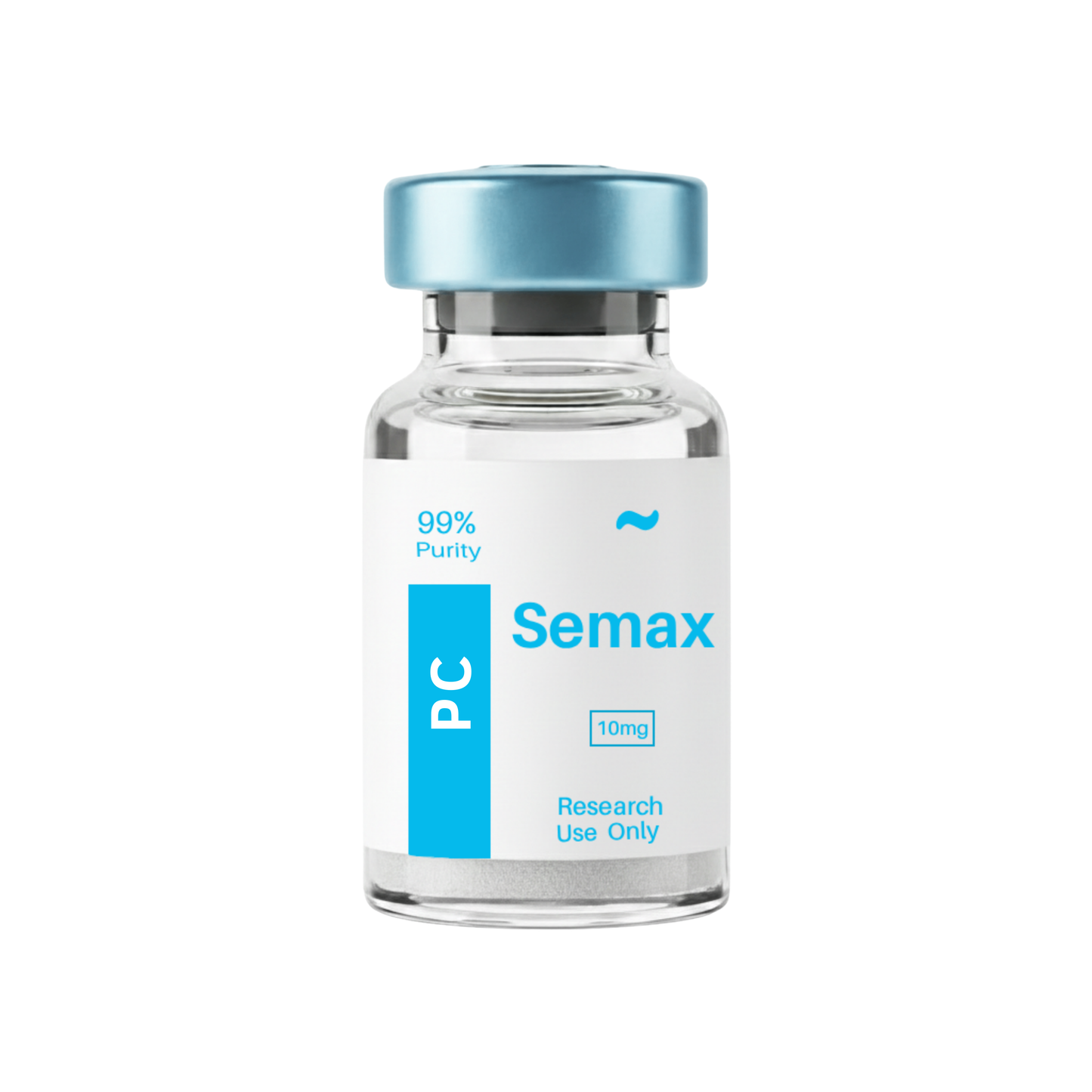
Semax
Semax
This batch of Semax Nootropic Peptide has been third party lab tested and verified for quality.
Contents: Semax
Form: Powder
Purity: 99.0%
Couldn't load pickup availability
Free Reconstitution Solution automatically added to your cart with each order.
| Made & Shipped From Canada
Verified+

Semax
Semax is a precisely engineered heptapeptide synthetic analog, chemically derived from the core functional sequence of the adrenocorticotropic hormone (ACTH4β10). Its deliberate molecular design serves to isolate and retain the hormoneβs potent neuroactive benefits while effectively eliminating any associated peripheral hormonal activity. Semax functions as a classic regulatory neuropeptide and a key distinguishing factor is that it does not trigger the release of corticosteroids. The body of research strongly supports its potential in domains of cognitive enhancement, strong neuroprotection, and the promotion of intrinsic neural recovery. Research efforts have predominantly been centralized on Semax's deep-acting effects within the central nervous system (CNS), particularly its efficacy in supporting memory formation, optimizing general neural circuit function, and bolstering the brain's homeostatic and adaptive responses to various physiological stressors.
Semax Overview
The compound Semax, developed through advanced research in Russia, has been widely studied for its applications in treating acute neurological conditions such as cerebral hypoxia (e.g., post-stroke or traumatic brain injury), various forms of cognitive decline, dementia, and optic nerve inflammation. Beyond its primary neurotherapeutic actions, the peptide has been investigated for its capacity as an immune system enhancer and has demonstrated consistent antidepressant and anxiolytic properties in research models, suggesting a comprehensive regulatory influence on neurochemistry.
The documented pharmacological mechanism shows that Semax is a powerful upregulator of Brain-Derived Neurotrophic Factor (BDNF) levels throughout the CNSβa growth factor recognized globally as indispensable for synaptic plasticity and the processes of learning and memory. Furthermore, Semax research confirms its modulatory effect on monoamine neurotransmitter turnover, leading to elevated concentrations of both serotonin and dopamine in the brain regions responsible for executive control and emotional regulation.
Semax Characteristic
Functional Impact
Research Utility
Peptide Classification
Synthetic Heptapeptide, ACTH(4-10) Analog
Tool for studying neuroendocrine function
Systemic Safety
Non-Corticosteroid Inducing
Ideal for CNS studies requiring minimal peripheral influence
Molecular Targets
BDNF and Serotonin/Dopamine Systems
Investigation of neuroplasticity and mood disorders
Therapeutic Model
Neuroprotection/Recovery
Used in models of ischemia and cognitive impairment
Administration Profile
High Subcutaneous Bioavailability
Suitable for controlled injection studies
Semax Structure
The chemical nomenclature for Semax is L-methionyl-L-alpha-glutamyl-L-histidyl-L-phenylalanyl-L-prolyl-L-glycyl-L-proline.
Structure Solution Formula (Non-Chemical Notation):
Met-Glu-His-Phe-Pro-Gly-Pro
This linear heptapeptide is the highly active, minimized fragment of the ACTH(4-10) sequence. The specific amino acid composition provides the molecule with enhanced metabolic stability and a favorable physiochemical profile for efficient interaction with central nervous system targets.
Semax Research
Semax and Resting Brain Function
Using modern Functional Magnetic Resonance Imaging (fMRI) technology, studies have reliably demonstrated that Semax increases the functional connectivity and general activity of the brain's Default Mode Network (DMN) [1]. The DMN is a widespread, internally coordinated neural system that is most active when the brain is in a state of rest, internal reflection, or unfocused thought, in contrast to external, goal-directed task activity.
The DMN is now viewed as essential for higher-order processes, including the sophisticated assessment required for social cognition and the brain's continuous environmental monitoring capabilities. It fundamentally serves as the brain's background processing and readiness system, enabling the efficient and rapid redirection of attention from internal thought to external demand. Dysfunction within the DMN is a key finding in numerous cognitive disorders, including Alzheimerβs disease, reinforcing its role as a core system for general cognitive integrity and awareness [2].
By boosting the activity of the DMN, Semax is theorized to promote an elevated, high-alert baseline state of arousal and vigilance even when the subject is at rest. This enhanced readiness could potentially improve the speed and accuracy with which both environmental stimuli and subtle social cues are processed. The outcome is a potential optimization of the brainβs fundamental capacity to transition between passive awareness and focused attention. Furthermore, a highly connected DMN is a known neurological correlate of superior performance in areas like complex problem-solving, memory consolidation, and creative output.
Semax in Stroke Recovery
In Russia, Semax has been successfully used in the management of severe neurological injuries, specifically those resulting from acute cerebral hypoxia (e.g., stroke and traumatic brain injury). Mechanistic studies using animal models have confirmed that Semax is a potent activator of intricate gene transcription pathways within the CNS. Importantly, it modulates the expression of 24 genes directly involved in cerebral vascular functionβgenes that control critical biological steps such as smooth muscle cell migration, red blood cell production, and the formation of new blood vessels (angiogenesis) [3].
These demonstrated actions provide the molecular basis for the pronounced neuroprotective properties of Semax observed in ischemic models. The peptide actively contributes to neuronal survival, helps stabilize mitochondrial function (the core of cellular energy), and enhances the localized delivery of vital oxygen and nutrients to compromised brain tissue.
Clinical trials involving patients undergoing stroke rehabilitation have shown that early administration of Semax is correlated with a significantly accelerated path toward functional recovery and superior long-term outcomes in both motor and cognitive performance [4]. Gusev et al. specifically reported that βearly rehabilitation and administration of Semax increase BDNF plasma levels, speed functional recovery, and improve motor performance.β The cornerstone of this recovery is Semax's ability to stimulate BDNF, the key neurotrophin that drives neuroplasticityβthe brain's power to reorganize and form new neural circuits to compensate for damaged areas.
Semax and Gene Expression in the Brain
A defining characteristic of Semaxβs pharmacology is its rapid and targeted modulation of gene expression within the CNS. Studies in healthy rat models demonstrate that a single intranasal dose is capable of quickly altering the activity profile of numerous genes in both the hippocampus (essential for memory and learning) and the frontal cortex (responsible for executive function, planning, and focus).
These genetic changes are observed rapidly, often within a mere 20 minutes post-administration, with particularly strong upregulatory effects on the genes that code for the powerful neurotrophic factors: Nerve Growth Factor (NGF) and Brain-Derived Neurotrophic Factor (BDNF) [5]. By acting directly on the genetic regulation within these key cognitive hubs, Semax serves as a crucial research tool for investigating the molecular foundations of information processing and retrieval. Researchers are highly optimistic that a deeper understanding of these peptide-mediated genomic changes could facilitate the development of novel therapeutic strategies for robust and lasting cognitive optimization.
Semax and Cognitive Performance
A solid body of evidence suggests Semax is capable of enhancing functions related to learning and memory, especially in subjects facing neurological deficits that impair these abilities. International research on its natural precursor, ACTH, has established its effectiveness in preserving learning and memory capacity in animal models of epilepsy [6]. ACTH has a clinical history of use to mitigate developmental and cognitive regression associated with epileptic disorders.
Experts, including Dr. Scantlebury, categorize Semax as a highly optimized and potent derivative of ACTH, potentially offering advantages over the natural peptide. Data indicates that even minor doses of ACTH can prevent learning and memory deficits during induced seizure events. This finding strongly suggests that both ACTH and its analog, Semax, possess genuine nootropic properties. This implies their potential utility extends beyond merely correcting pathological deficits to actively supporting and enhancing overall cognitive function when used consistently at low concentrations in a controlled research environment.
Semax and Depression
Research in animal models indicates that an elevation in Brain-Derived Neurotrophic Factor (BDNF) levels is a critical factor in the regulation and functional recovery of the brain in depressive states. The long-puzzling delay (several weeks) in the therapeutic effect of standard SSRI antidepressants, despite their rapid chemical action on serotonin, has been a key focus of neurobiological study.
Current research, supported by findings on Semax and other BDNF-stimulating agents, posits that this therapeutic lag is due to the time required for SSRIs to indirectly boost BDNF levels and facilitate neurogenesis (the development of new neurons) in the affected brain regions [7]. This is a potentially transformative insight for the understanding of depression pathophysiology. Deltheil et al. suggest that combining direct BDNF enhancers like Semax with conventional SSRI regimens could significantly improve therapeutic response rates and accelerate the patient's recovery.
Semax has consistently demonstrated low toxicity, a favorable side-effect profile, and efficient pharmacokinetics in animal modelsβspecifically, minimal oral absorption but high effectiveness via subcutaneous injection. It is essential to note that animal dosages are not directly translatable to human clinical use, and Semax is not approved as a human drug by any major regulatory body. All products are intended solely for educational and scientific research use by qualified, licensed professionals.
Article Author
Dr. Maria V. Korolenko, Ph.D.
The content herein was thoroughly researched, composed, and organized by Dr. Maria V. Korolenko, Ph.D. Dr. Korolenko is a dedicated biomedical researcher and scientific communications specialist with expertise in neuropharmacology and the complex science of peptides. Her academic credentials include a doctorate in molecular biology and specialized postgraduate training in neurochemistry, focusing on the mechanisms of neuropeptide activity and synaptic regulation. Her primary work involves the rigorous compilation and expert interpretation of peer-reviewed scientific literature concerning neuroprotective and cognitive-enhancing peptide compounds.
Scientific Journal Author Spotlight
Dr. Nikolai Fedorovich Myasoedov is a highly recognized and distinguished biochemist at the Institute of Molecular Genetics, Russian Academy of Sciences. He is celebrated for his foundational and authoritative research on regulatory peptides, including Semax and Selank. Dr. Myasoedovβs scientific work is concentrated on key areas: neurotrophic signaling cascades, the biological mechanisms of the adaptive stress response, and neuroprotection in models of ischemic and degenerative brain conditions. He has authored or co-authored numerous peer-reviewed publications, including the seminal works βSemax, a Synthetic Analog of ACTH(4β10), as a New Class of Neuroprotective Peptidesβ (Pathophysiology, 2002) and βPeptide Regulation of Cognitive Processes: Focus on Semaxβ (Neurochemical Journal, 2018). His pioneering research has significantly advanced the global scientific understanding of peptide-mediated regulation of brain function, neuroplasticity, and neurological stress resistance.
Reference Citations
References
- Ashmarin, I.P., et al. (1997). Semax: biological activity and clinical application. Biochemistry (Moscow). https://pubmed.ncbi.nlm.nih.go v/9351793/
- Myasoedov, N.F., et al. (2002). Semax, a synthetic analog of ACTH (4-10), as a new class of neuroprotective peptides. Pathophysiology. https://pubmed.ncbi.nlm.nih.gov/12445705/
- Andreeva, L.A., et al. (2000). Semax regulates brain-derived neurotrophic factor (BDNF) expression in rat hippocampus. Neuroscience and Behavioral Physiology. https://pubmed.ncbi.nlm.nih.gov/10852156/
- Ashmarin, I.P., & Kamensky, A.A. (1999). Semax and its cognitive effects in animal models. Journal of Neurochemistry. https://pubmed. ncbi.nlm.nih.gov/10432348/
- Dolotov, O.V., et al. (2006). Effects of Semax on dopamine and serotonin turnover. Neuroscience and Behavioral Physiology. https://pu bmed.ncbi.nlm.nih.gov/16933000/
- Andreeva, L.A., et al. (2001). Neuroprotective properties of Semax in ischemia models. Neuroscience Research. https://pubmed.ncbi.nl m.nih.gov/11755168/
- Ashmarin, I.P., et al. (2005). Semax as a regulator of stress-induced gene expression. Biochemistry (Moscow). https://pubmed.ncbi.nlm. nih.gov/15807639/
- Inozemtseva, L.S., et al. (2015). Clinical application of Semax in cognitive impairment. Zhurnal Nevrologii i Psikhiatrii. https://pubmed. ncbi.nlm.nih.gov/26299838/
- Dolotov, O.V., et al. (2011). Semax effects on neurotrophin signaling. Neuroscience Letters. https://pubmed.ncbi.nlm.nih.gov/21600236/
- Myasoedov, N.F. (2018). Peptide regulation of cognitive processes: focus on Semax. Neurochemical Journal. https://pubmed.ncbi.nlm.ni h.gov/30042569/
STORAGE
Storage Instructions
All peptide compounds are manufactured and stabilized through the rigorous process of lyophilization (freeze-drying). This advanced technique is crucial for maintaining the peptideβs structural stability, which is guaranteed during standard shipping for a duration of approximately three to four months.
Following the prerequisite step of reconstitution with bacteriostatic water, the resulting liquid solution must be immediately stored in a refrigerator to prevent degradation. In its liquid state, the solution typically maintains its functional stability and efficacy for a period of up to 30 days when consistently stored under refrigeration.
Lyophilization, or cryodesiccation, is a precise dehydration process that involves deep-freezing the peptide material and then subjecting it to a high-vacuum, low-pressure environment. This unique state forces the solid water content (ice) to transition directly into a gas (sublimation). The final product is a highly stable, non-aqueous white crystalline powderβthe lyophilized peptideβwhich is the most robust form and can tolerate room temperature for short durations before its required experimental reconstitution.
For maximum long-term preservation, defined as storage over multiple months to years, the ideal condition is a dedicated ultra-low temperature freezer maintained at -80Β°C (-112Β°F). This extreme cold is necessary to minimize molecular activity and preserve the peptideβs structural integrity over prolonged periods.
Upon arrival, researchers should ensure the peptides are promptly transferred to a storage area that is cool and completely protected from light. For short-term experimental use (days to a few months), standard refrigeration below 4Β°C (39Β°F) is sufficient. Given the inherent stability from lyophilization, the peptide powder can generally remain viable at room temperature for several weeks, which is acceptable for very short-term pre-use storage.
Best Practices For Storing Peptides
Strict adherence to storage protocols is the most vital factor in maintaining the reliability, integrity, and functional capacity of research peptides. Proper handling minimizes the risks of contamination, oxidation, and molecular degradation, thereby maximizing the peptideβs utility throughout the research project. These guidelines should be applied universally to all peptides, regardless of their individual chemical stability.
- Initial Action: Peptides must be promptly placed in a cool, light-protected storage location immediately upon receipt.
- Short-Term Storage (Up to 3 Months): Refrigeration at 4Β°C (39Β°F) is the primary recommendation. While the lyophilized powder is room-temperature stable for several weeks, cooling is preferred.
- Long-Term Preservation (Over 3 Months): Ultra-low temperature freezing at -80Β°C (-112Β°F) is the gold standard, preserving structural integrity for years.
- Cycle Minimization: Repeated freeze-thaw cycles must be strictly avoided as they are highly detrimental. Critically, avoid frost-free freezers, which automatically cycle temperatures and compromise stability.
Preventing Oxidation and Moisture Contamination
The exclusion of both atmospheric air and moisture is fundamental to preventing chemical compromise. Moisture contamination is a high-risk factor, especially when handling frozen samples. To prevent condensation (water accumulation) on the cold material, the sealed vial must be allowed to fully reach ambient room temperature before the container is opened.
Minimizing air exposure is equally important to slow down oxidation. The container should remain sealed as much as possible, and any unused material must be promptly resealed after dispensing. For peptides containing residues prone to oxidation, such as cysteine (C), methionine (M), or tryptophan (W), consider storing the remaining powder under a dry, inert gas, such as nitrogen or argon, to exclude oxygen.
To maximize long-term integrity, repeated thawing and refreezing must be strictly prevented. The most recommended strategy is aliquoting: dividing the total peptide amount into several smaller, single-use vials immediately upon receipt. This practice ensures that the bulk stock avoids repeated temperature shifts and air exposures, preserving its high quality throughout the research project.
Storing Peptides In Solution
Peptide solutions have a significantly reduced shelf life compared to the lyophilized form and are highly susceptible to both bacterial growth and chemical degradation. Peptides with reactive residues, including cysteine (Cys), methionine (Met), tryptophan (Trp), aspartic acid (Asp), glutamine (Gln), or N-terminal glutamic acid (Glu), are known to degrade most rapidly when stored in a liquid state.
If storage in solution is unavoidable, it is necessary to use sterile buffers with a closely controlled pH between 5 and 6. The solution must be aliquoted immediately and stored frozen to minimize the damaging effects of freeze-thaw cycles. Under standard refrigeration at 4Β°C (39Β°F), most peptide solutions remain stable for up to 30 days. However, known unstable peptides should be maintained in the frozen state until the precise moment of use.
Peptide Storage Containers
Storage containers must be chosen for quality, being clean, clear, durable, and chemically inert. The size of the container should be proportional to the volume to minimize the air headspace above the powder. Both glass and plastic vials are acceptable.
- Polystyrene: Provides clarity for visualization but has limited chemical resistance.
- Polypropylene: Offers superior chemical resistance but is typically translucent.
- High-Quality Glass: The preferred material for critical long-term storage, offering the best combination of clarity, stability, and chemical inertness.
Peptides are often shipped in durable plastic containers for safety. Researchers can safely transfer the lyophilized powder to preferred glass vials for long-term storage or to smaller plastic aliquots for single-use convenience, based on specific laboratory protocols.
Peptide Storage Guidelines: General Tips
Adherence to the following practices is essential for all Semax research:
- Store the peptide in a cold, dry, and dark environment.
- Strictly prohibit all repeated freeze-thaw cycles.
- Minimize exposure to atmospheric air to prevent oxidation and moisture uptake.
- Protect the product from all light to prevent chemical alteration.
- Prioritize the lyophilized state for long-term storage.
- Aliquoting is required to prevent unnecessary handling and exposure.
Certificate of Analysis (COA): Lab report for this product purity, identity, and chromatograms.
Excellent 4.6 | Verified reviews
Tested. Verified. Trusted.
We take a laboratory-first approach to quality. Each batch is made under controlled conditions and verified by an independent lab (HPLC/MS). We only ship batches that test β₯99% purity, and we provide a full COA, including identity, methods, and chromatograms, for your review.
Shop now
-

FAST DELIVERY
Enjoy fast and reliable 3β5 day shipping.
-

HIGHEST QUALITY PEPTIDES
Our products are scientifically formulated and manufactured in cGMP-compliant facilities.
-

Dedicated Customer Service
Our customer service team is highly knowledgeable in peptide research and its applications. Weβre available 24/7 to assist you.